8 ServiceNow Alternatives for CX & Contact Centers (2026)
Does ServiceNow adequately support your customer service and operational workflows, or could your team achieve higher customer satisfaction with a platform built specifically for customer experience (CX)? As you consider your options in 2026, you’ll likely find that while ServiceNow is a heavyweight in IT Service Management (ITSM), it lacks features for direct customer interaction, telephony, and contact center workflows.
ServiceNow offers powerful software for workflow automation and IT service management, but it comes with a steep learning curve, long implementation times, and a high total cost of ownership. For heads of support and customer service departments (as well as contact center managers), paying for complex ITIL frameworks is a costly misinvestment when what’s actually needed is an agile, omnichannel customer experience solution.
Whether you’re a growing mid-sized business that needs a more responsive communication platform or a customer-centric enterprise looking to optimize customer-facing operations, this guide compares the top 8 ServiceNow alternatives for customer service, contact centers, and service management in 2026.
Key Takeaways: Top 8 ServiceNow Competitors at a Glance
| Alternative | Use case | vs. ServiceNow | Comparable plan |
|---|---|---|---|
| Nextiva | All-in-one CX & contact center | Native voice, omnichannel messaging, and AI automation without ITSM complexity | $75/user/month (Essential) |
| Zendesk | Customer support & help desk | Purpose-built customer ticketing, AI agents, and deep helpdesk features | $55/agent/month (Suite Team) |
| Help Scout | Lightweight shared inbox | Simple, human-centric email support and shared inbox collaboration | $45/user/month (Plus) |
| Jira Service Management | Atlassian-native ITSM | Deep Jira/developer integration at a fraction of ServiceNow’s license cost | $51.42/agent/month (Premium) |
| BMC Helix | Legacy enterprise ESM | Enterprise Service Management for multi-cloud, complex IT environments | Custom enterprise quote |
| Ivanti | IT & security management | Unifies endpoint security and asset management directly with service desks | Custom enterprise quote |
| SysAid | Mid-market IT service desk | Easy-to-deploy IT service desk with built-in asset tracking and remote control | Custom enterprise quote |
| SolarWinds Service Desk | AI-powered IT asset management | Accessible ITSM with automated asset dependency mapping and CMDB | $39/user/month |
Why Teams Look for a ServiceNow Alternative
ServiceNow is a heavyweight in the enterprise IT sector. However, when businesses attempt to adapt ServiceNow for Customer Service Management (CSM) or contact center operations, they encounter operational bottlenecks:
High costs and a lack of cost control
ServiceNow doesn’t offer transparent pricing. Licenses for “fulfillers” can cost between $100 and over $200 per user per month, while the Customer Service Management (CSM) module incurs an additional $150 to $200 per fulfiller per month.
Adding ServiceNow’s AI component (Now Assist) tacks on another $25 to $75 per user per month. Implementation costs can amount to three to five times the first-year licensing fees; consequently, total first-year investment costs can quickly reach six figures, even for mid-sized teams.
Complex implementation and IT needs
Setting up ServiceNow isn’t a plug-and-play solution. Rollout can take three to nine months and requires specialized third-party system integrators or internal developers to write custom scripts.
Passive case management vs. active customers
ServiceNow CSM was developed from an IT ticketing perspective, treating customer inquiries as passive cases or incidents. Out of the box, it lacks features such as carrier-grade voice infrastructure, real-time queue management, or native contact center routing.
Cluttered, unintuitive agent workspace & slow support
Customer service staff spend their workday navigating complex form fields and IT-heavy drop-down menus rather than interacting naturally with customers via phone, SMS, web chat, or social messaging.
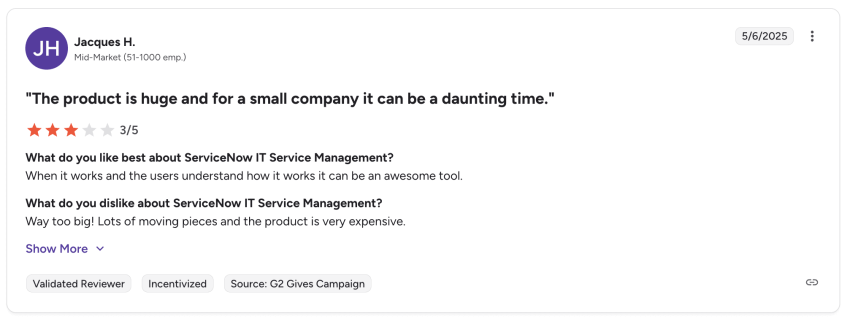
ServiceNow’s support, geared toward large enterprises, isn’t always suitable for smaller companies or the mid-market; this can lead to slow ticket processing during system issues.
Where ServiceNow Still Works
Before you replace or bypass ServiceNow, it’s important to understand where the platform rightfully shines:
- Enterprise ITIL Standard: ServiceNow continues to be a global standard for large Fortune 500 companies that require strict adherence to Information Technology Infrastructure Library (ITIL) frameworks for incident, problem, change, and release management.
- Cross-department workflow automation: The platform can bring IT, HR Service Delivery, Legal, and Facilities together in a common enterprise-wide workflow.
- Deep configuration database (CMDB): It’s unrivaled for enterprise IT asset tracking and maps complex IT infrastructure dependencies across cloud and on-premises environments.
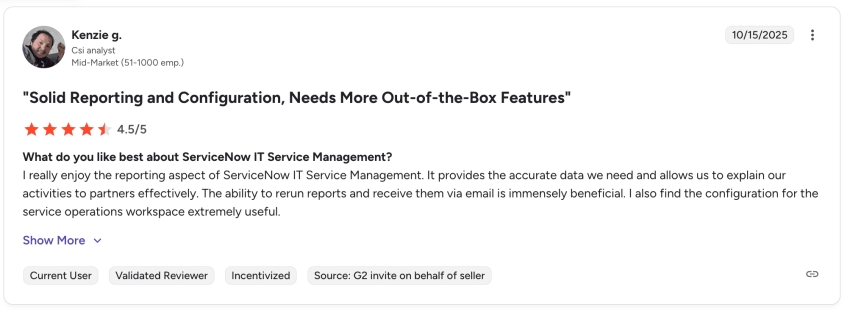
ServiceNow is a good fit for managing change management and IT assets globally. But if you want to deliver fast omnichannel customer support and empower contact center agents, more streamlined, purpose-built platforms deliver a much better time-to-value and lower total cost of ownership.
Top 8 ServiceNow Alternatives
Our curated list breaks down top competitors, providing an overview, features, pricing, and why they make excellent alternatives.
1. Nextiva
Best for: Unified customer communications and experience management
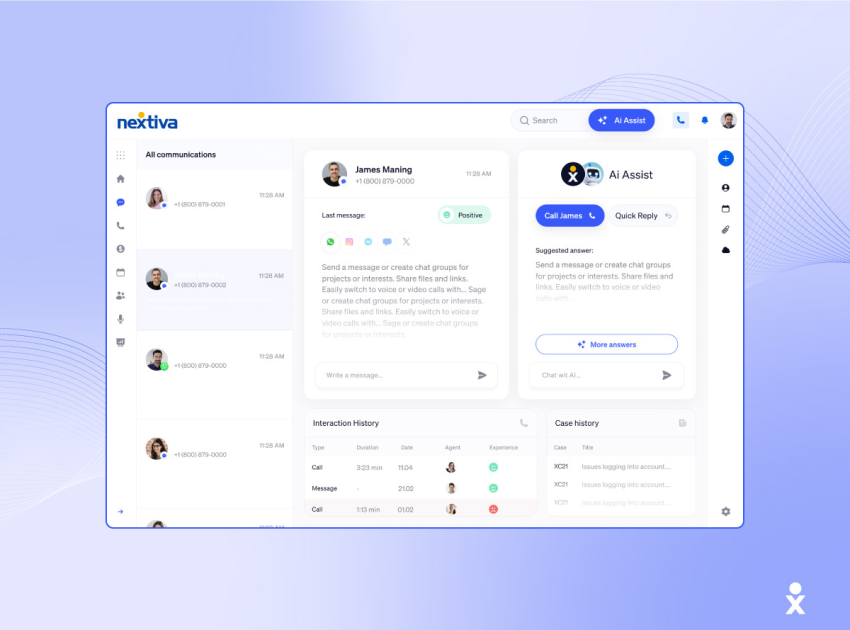
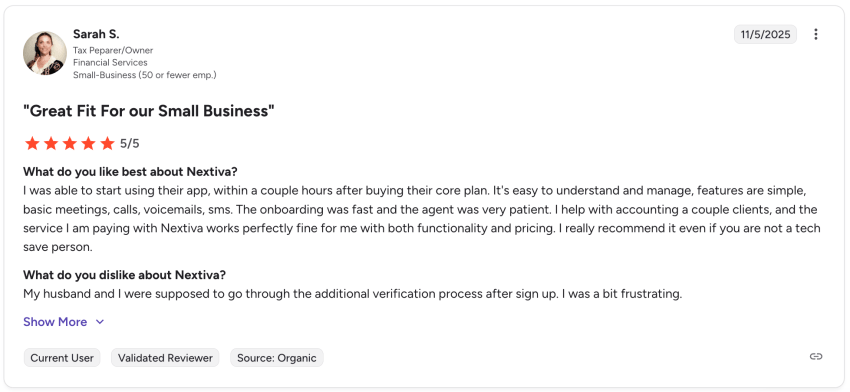
Nextiva is a cloud-based communication platform that integrates voice, video, messaging, and customer experience management into one seamless solution. Its AI automation and analytics help businesses streamline each customer interaction and improve service and operational efficiency. Unlike ServiceNow, which focuses more on IT service management, Nextiva excels in providing unified communications with a customer-centric approach.
Key features
- Unified agent workspace (NextivaONE): Allows customer service agents to handle inbound calls, text messages, live web chats, social media inquiries, and internal team chats without switching between different applications.
- Integrated generative AI: Offers native real-time call transcription, post-interaction summaries, customer sentiment analysis (sentiment scoring), and conversational virtual agents.
- Process automation & CRM sync: Automatically logs interactions, updates CRM records, and sends follow-up messages (SMS or email) immediately after a customer conversation ends.
- Carrier-grade reliability: Backed by 99.999% SLA uptime and 24/7 live technical support.
Pricing
Enterprises can opt for monthly contact center plans that start at $75 per user, which is a full omnichannel CCaaS suite, with real-time supervisor dashboards, journey automation, and AI transcriptions. Optional usage-based plans are also available.
👉 Check Nextiva’s contact center pricing here.
Why it’s a strong ServiceNow alternative
Nextiva is a strong alternative for businesses prioritizing customer experience over traditional IT service management tools. Its advanced communication tools and automation provide frictionless interactions, making it an excellent choice for service-driven organizations.
Plus, Nextiva’s built-in omnichannel capabilities make it a top choice for enterprises needing voice, text, and social media interactions to be accessible to authorized team members.
📚 Read Nextiva reviews on G2 (4.5 stars)
2. Zendesk
Best for: Customer service and help desk workflows
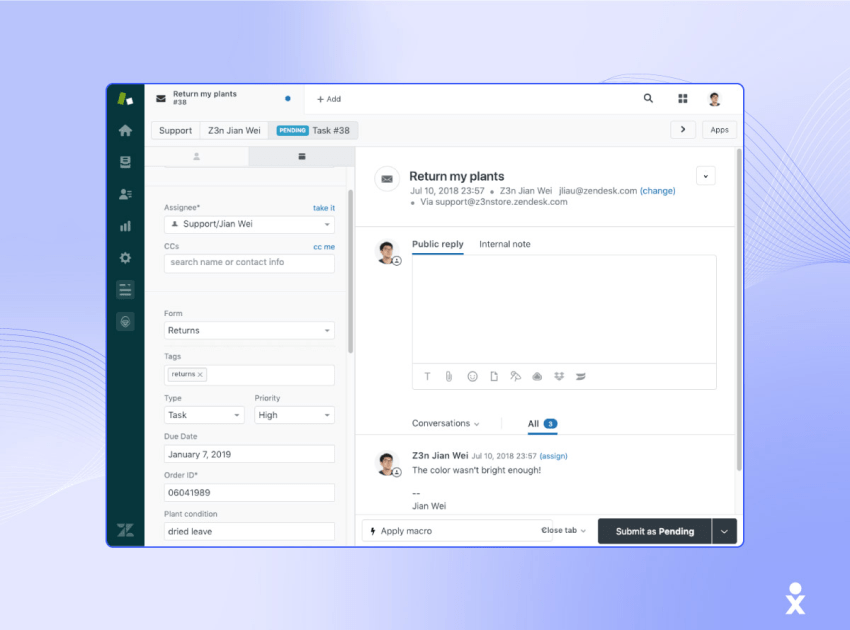
Zendesk is a widely used customer experience software and help desk solution that offers scalable tools for businesses of all sizes. It provides automation, AI chatbots, and a marketplace full of integrations with third-party applications.
This platform stands out for its focus on customer experience. If you need a ServiceNow alternative with strong customer support capabilities, Zendesk is worth considering.
Key features
- Omnichannel ticketing: Consolidates inquiries from email, chat, messaging apps (WhatsApp, Facebook Messenger), and phone queues into a central inbox for service agents.
- Zendesk AI & Copilot: Automated ticket classification, sentiment analysis, and drafting of suggested responses for agents.
- Help Center & Community Hubs: Helps customers resolve simple issues independently via customizable self-service portals.
Pricing
- Support Team ($19 per agent/month): Basic email ticketing only.
- Suite Team ($55 per agent/month): Includes omnichannel routing, live chat, knowledge base, and basic AI agents.
- Suite Professional ($115 per agent/month): Adds skills-based routing, advanced reporting, and IVR phone trees.
- Suite Enterprise + Copilot: Custom quote
Why it’s a strong ServiceNow alternative
Zendesk is faster to set up and far more user-friendly for frontline customer support reps than ServiceNow’s heavy ITSM interface.
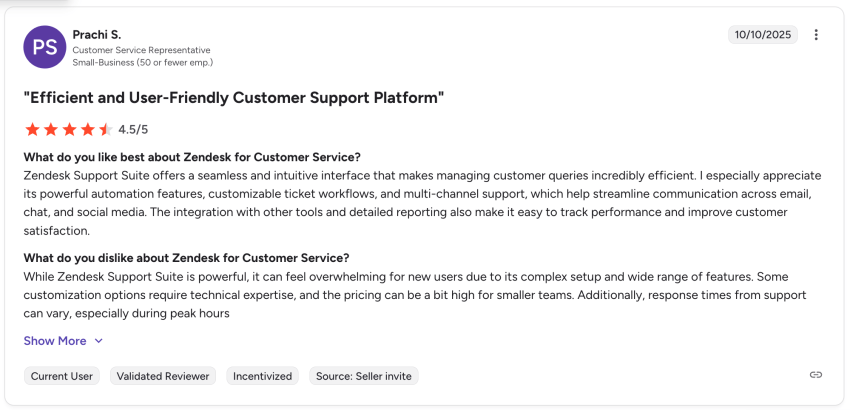
📚 Read Zendesk reviews on G2 (4.3 stars)
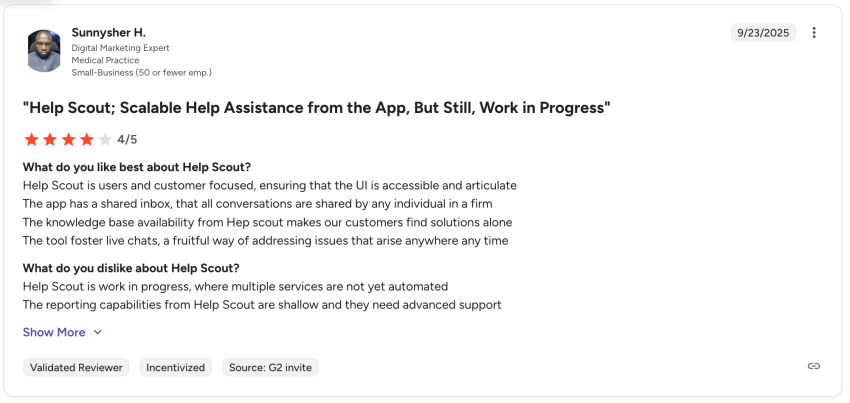
3. Help Scout
Best for: Shared inbox and human email support
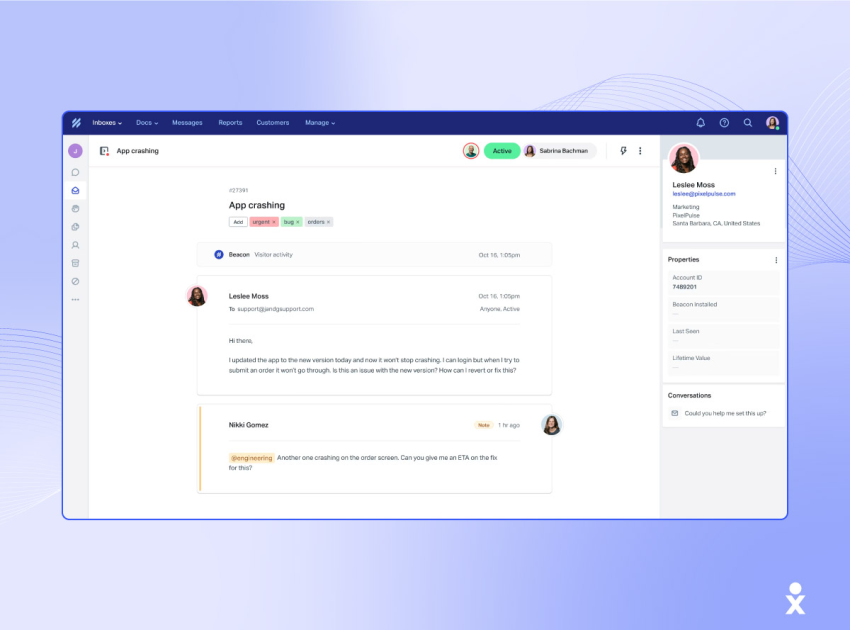
Help Scout provides a streamlined approach to customer service, focusing on shared inbox collaboration for support teams. It enables businesses to manage customer inquiries efficiently while keeping internal teams aligned. Compared to ServiceNow, Help Scout is a more lightweight alternative focused on email-based support and team collaboration.
Key features
- Shared inboxes: Allows teams to assign, tag, and collaborate on customer emails.
- Docs knowledge base: Helps create self-service help articles to reduce incoming ticket volume.
- Beacon widget: Embeds self-service docs and live chat directly on your website or web app.
Pricing
- Standard ($25 per user/month): Multiple inboxes, a Docs knowledge base, and messaging.
- Plus ($45 per user/month): Adds advanced reporting, custom fields, and enterprise integrations.
- Pro ($75 per user/month): Unlocks dedicated onboarding and API limits.
Why it’s a strong ServiceNow alternative
Help Scout eliminates the steep learning curve and high costs of ServiceNow for small-to-midsized businesses that primarily manage email and chat support.
📚 Read Help Scout reviews on G2 (4.4 stars)
4. Jira Service Management
Best for: IT Service Management for agile and developer teams
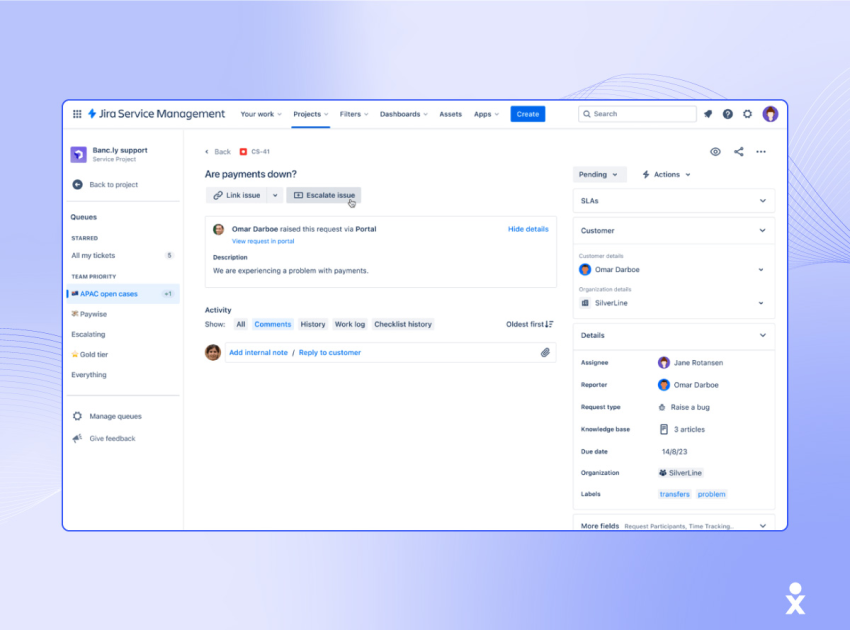
Jira Service Management, from Atlassian, provides a robust platform for IT service management (ITSM). While it can handle customer service inquiries, its ability to streamline IT processes, such as incident, problem, change, and asset management, sets it apart. This focus on ITIL (Information Technology Infrastructure Library) best practices makes it a powerful tool for IT teams to resolve issues efficiently and maintain service level agreements (SLAs).
Key features
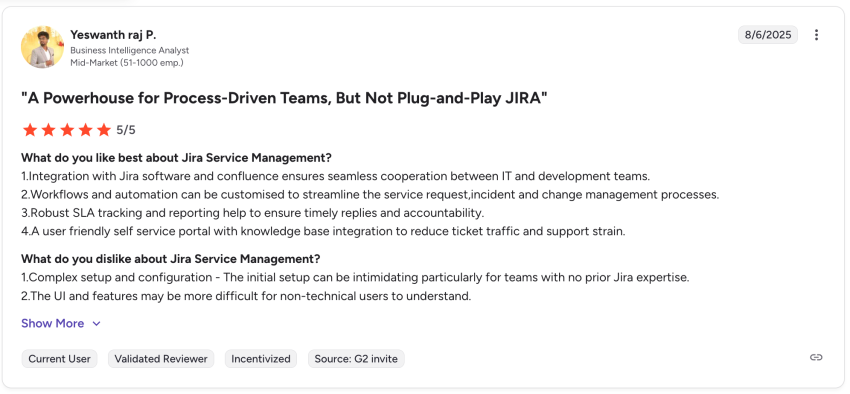
- DevOps & developer sync: Links IT service requests directly to developer backlogs in Jira.
- Asset & configuration management (Insight): Tracks hardware, software licenses, and cloud resources (included in Premium).
- Atlassian Rovo AI: Automated ticket triage, virtual service agents, and incident resolution suggestions.
Pricing
- Free: $0 (up to 3 agents).
- Standard: $20 per agent/month (approx. $17/month when billed annually).
- Premium: $51.42 per agent/month (approx. $47/month when billed annually), includes asset management, virtual AI agents, and 24/7 support.
- Enterprise: Custom quote
Why it’s a strong ServiceNow alternative
JSM offers powerful, ITIL-aligned service desk capabilities at approximately 20% to 30% of ServiceNow’s licensing costs and is more effortless to set up.
📚 Read Jira Service Management reviews on G2 (4.3 stars)
5. BMC Helix
Best for: Large-scale enterprise service management (ESM)
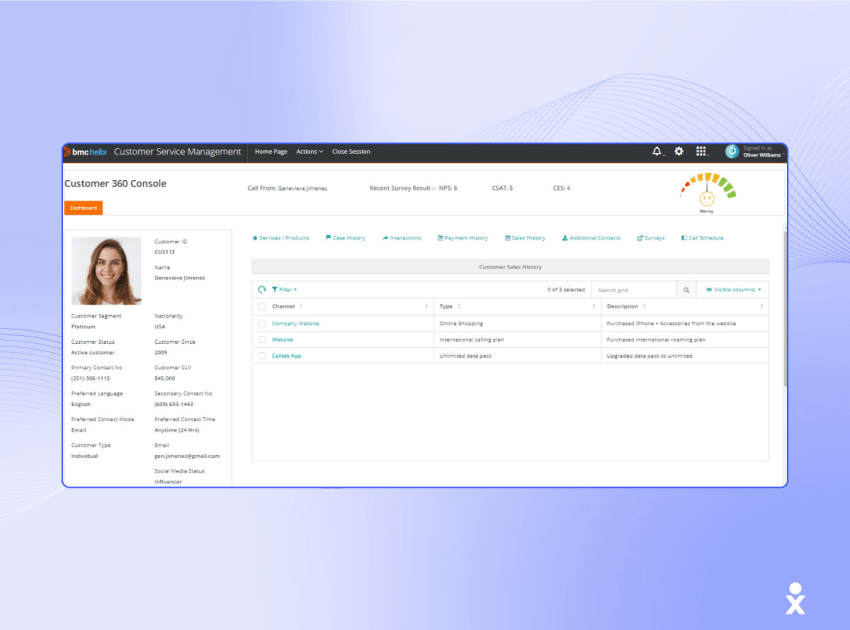
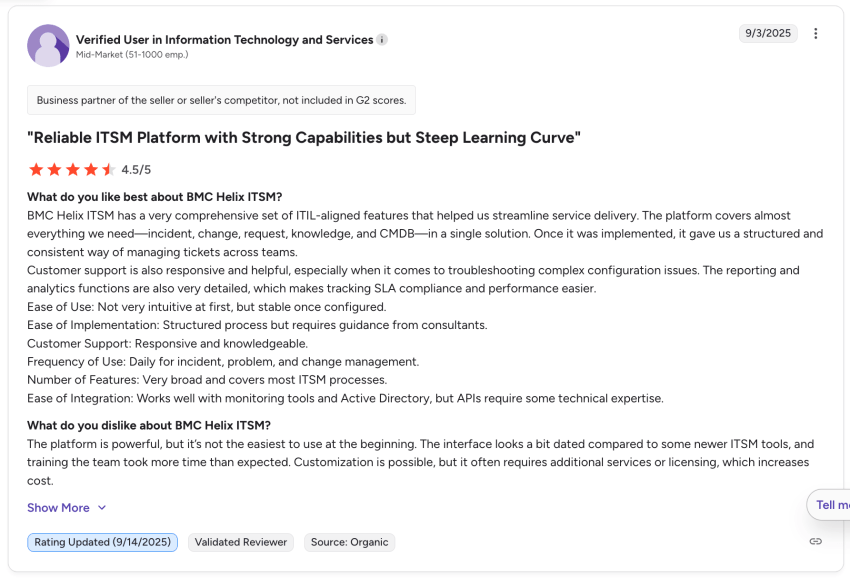
BMC Helix provides a suite of solutions designed to streamline operations, automate workflows, and enhance service delivery. In addition to IT, BMC Helix dips into HR, facilities, and other departments, offering a unified platform for enterprise service management.
With its AI and machine learning capabilities, BMC Helix proactively identifies and resolves issues, automates repetitive tasks, and offers insightful information about service performance. It’s built for complex environments, offering scalability and flexibility to adapt to evolving business needs.
Key features
- Cognitive service management: Uses AI and machine learning to identify infrastructure anomalies and automate incident resolution.
- Multi-cloud deployment: Deploy on AWS, Azure, BMC Cloud, or on-premises hybrid setups.
- BMC Helix Remix: Visual workflow automation engine for enterprise service orchestration.
Pricing
Custom enterprise quotes based on module selection and deployment scope.
Why it’s a strong ServiceNow alternative
BMC Helix offers a similar enterprise-tier solution for global organizations that require multi-cloud deployment options and AI-driven automation, while avoiding total vendor lock-in to ServiceNow.
📚 Read BMC Helix reviews on G2 (3.7 stars)
6. Ivanti Neurons for ITSM
Best for: Unified IT asset, device & security management
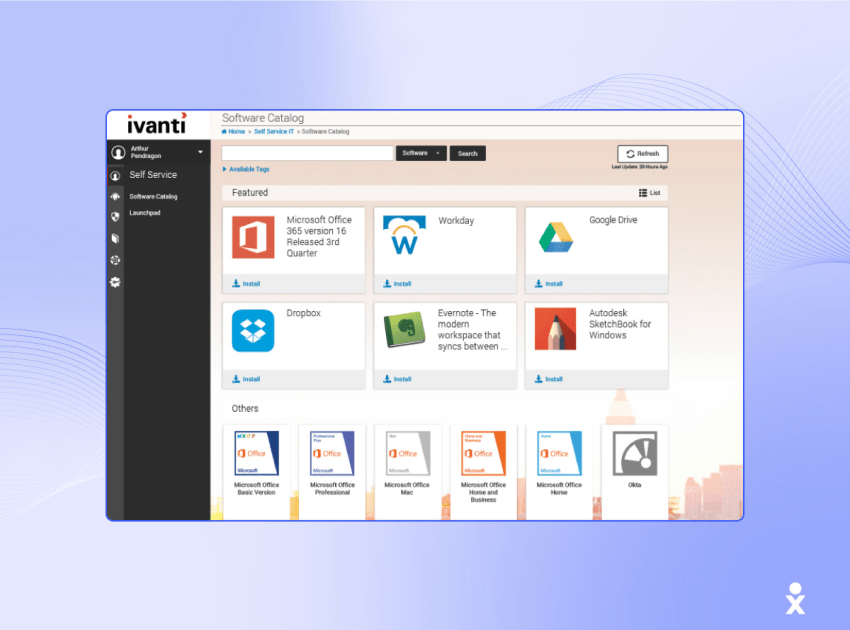
Ivanti unifies IT and security management with its service management platform. Its IT service desk integrates security features like vulnerability management and endpoint security, helping businesses manage IT assets and mitigate risks. The software can help businesses simplify IT operations and provides a range of solutions to automate routine tasks, manage devices, and secure the IT environment.
Key features
- Unified endpoint management: Secure and manage desktop, mobile, and IoT devices directly from service tickets.
- Automated asset lifecycle: Tracks software licensing, hardware deprecation, and asset allocation.
- Ivanti Neurons AI: Proactive self-healing automation that detects and fixes device issues before users report them.
Pricing
Custom enterprise quotes based on agent seats and endpoints managed.
Why it’s a strong ServiceNow alternative
Ivanti is ideal for IT teams that want to tightly pair service desk management with active endpoint security and device management.
📚 Read Ivanti reviews on G2 (4 stars)
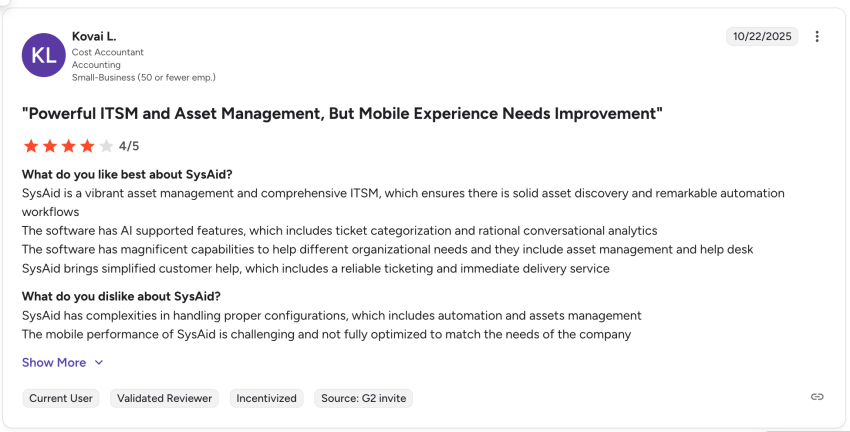
7. SysAid
Best for: Mid-market IT service desks
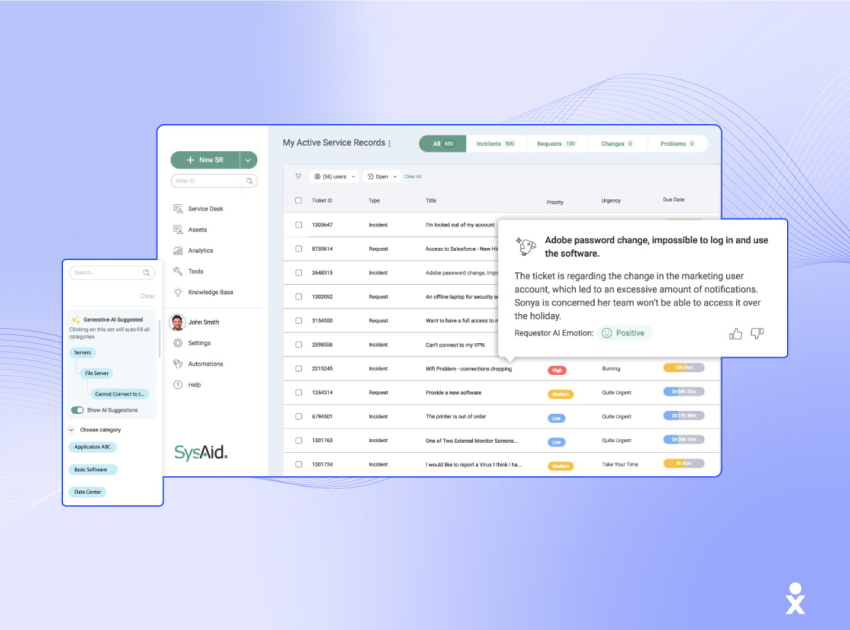
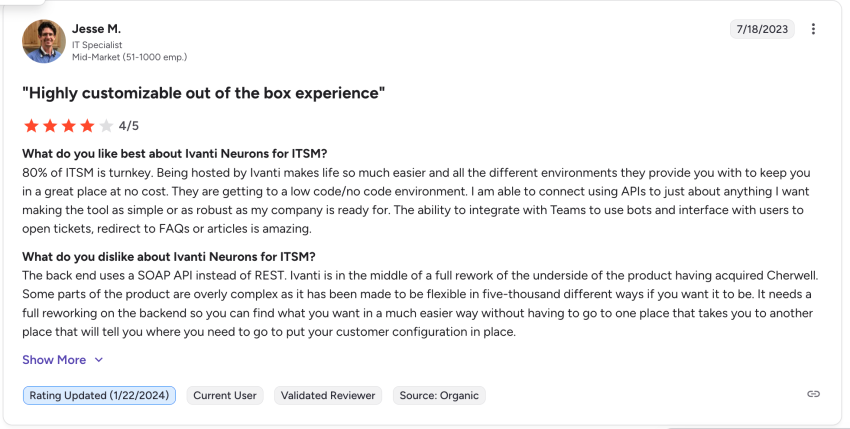
SysAid caters specifically to the needs of small- and medium-sized businesses (SMBs) who might be looking for a user-friendly and affordable IT service management solution. It provides a platform for managing IT support, automating repetitive tasks, and improving customer service without the complexity and cost of enterprise-grade solutions.
SysAid is easy to implement and use, even for smaller IT teams. It offers a range of features to help SMBs manage incidents, problems, changes, and assets effectively.
Key features
- SysAid Copilot: Generative AI that provides automated ticket summaries, user self-service chat, and resolution suggestions.
- Built-in asset discovery: Automatically scans local networks to maintain a hardware and software inventory.
- Remote control integration: Allows IT techs to launch remote desktop support sessions directly from an open ticket.
Pricing
Custom quotes tailored to mid-market seat bands and deployment preference (cloud or on-premises).
Why it’s a strong ServiceNow alternative
SysAid deploys in days rather than months, offering mid-sized companies an approachable, cost-effective service desk.
📚 Read SysAid reviews on G2 (4.5 stars)
8. SolarWinds Service Desk
Best for: AI-powered IT asset & service catalog management
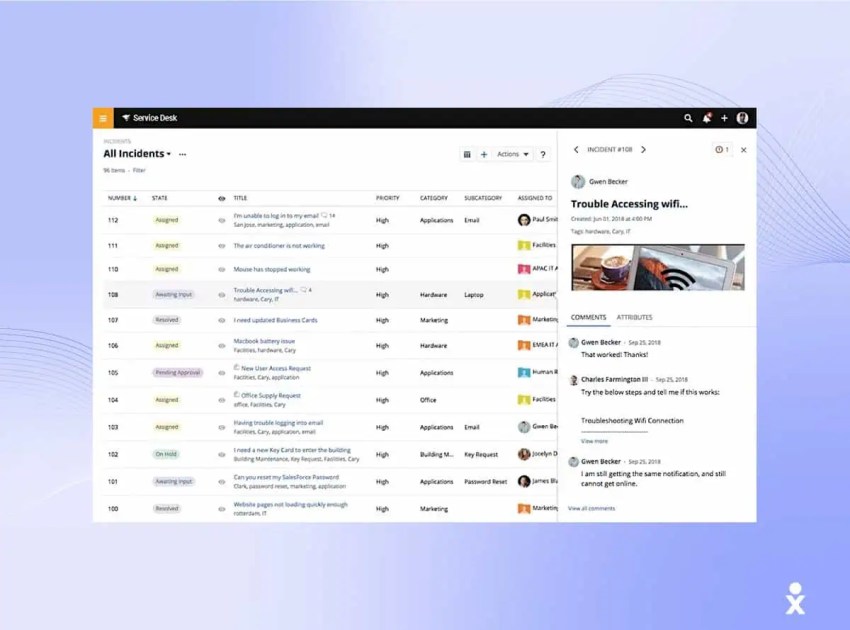
SolarWinds Service Desk is a cloud-based ITSM platform that helps organizations simplify support operations, reduce manual work, and maintain clear oversight of their IT assets with AI automation.
It suits growing businesses and IT organizations that need a flexible, scalable, and feature-rich service desk solution with asset management, change management, and a customizable service catalog. Its efficient workflows and modern interface help teams resolve issues faster.
Key features
- Visual CMDB & dependency mapping: Maps relationships between IT assets, applications, and business services to assess risk before changes are deployed.
- AI-powered virtual agent: Automates user password resets, software request approvals, and routine ticket triage.
- Service catalog automation: Standardizes hardware procurement and onboarding workflows.
Pricing
- Essentials ($39 per user/month): Core incident management and knowledge base.
- Advanced ($79 per user/month): Adds service catalog, SLA management, and customizable risk controls.
- Premier ($99 per user/month): Unlocks visual CMDB, automated asset dependency mapping, and advanced AI.
Why it’s a strong ServiceNow alternative
SolarWinds offers predictable per-user pricing and clean asset dependency mapping without the massive professional services burden of ServiceNow.
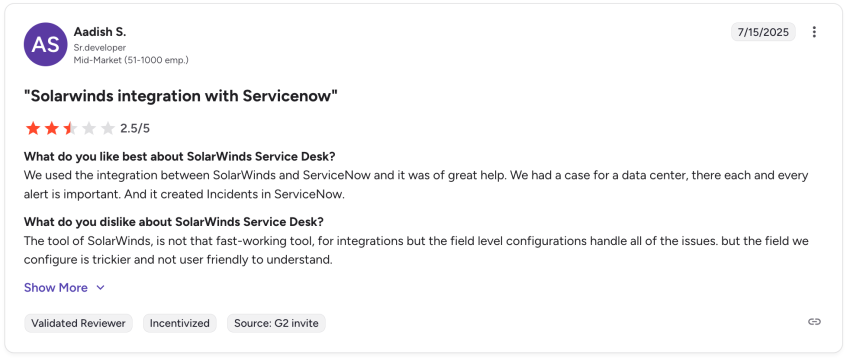
📚 Read SolarWinds reviews on G2 (4.3 stars)
ServiceNow CSM vs. Nextiva CCaaS: Choosing the Right Communication Architecture
Many customer service leaders deploy ServiceNow simply because their companies’ IT departments sometimes struggle to grasp the differences between IT-centric platforms and simplified unified communications platforms. However, there’s a fundamental architectural difference between ServiceNow Customer Service Management (CSM) and a Contact Center as a Service (CCaaS) platform like Nextiva:
ServiceNow CSM |
Nextiva CCaaS |
| Asynchronous case ticketing Requires telephony add-ons High custom dev overhead 3–9 Month Implementation $150–$200+/user/mo + AI fees |
Real-time voice & omnichannel Carrier-grade 99.999% voice Turnkey drag-and-drop workflows Days to weeks Deployment $75+/user/mo (all-inclusive) |
With ServiceNow CSM, third-party CTI (computer telephony integration) connectors or separate VoIP licenses must be purchased just to make a call or route an incoming web chat.
In contrast, Nextiva offers a unified cloud contact center that combines telephony, SMS, web chat, email, social messaging, team collaboration, and AI-powered process automation into a single, native workspace.
Why Nextiva Leads for Customer Experience & Service Operations
When looking at software replacements, the one thing you should ask yourself is: do you want to manage internal IT infrastructure or deliver better customer experiences?
If you want to boost customer satisfaction, front-line responsiveness, and contact center efficiency, Nextiva is the obvious winner:
- Cost efficiency you can’t beat: Skip six-figure ServiceNow implementation fees and $150-$200/month for fulfiller seat licenses. Nextiva has transparent all-inclusive pricing starting at $75/user/month.
- Carrier-grade voice built-in: Stop paying for 3rd-party voice connectors. Nextiva runs on a carrier-grade network with a 99.999% uptime SLA.
- Omnichannel simplicity: Contact center agents manage voice, SMS, web chat, email, and social messaging in a single application (NextivaONE).
- Instant time-to-value: Go live in days or weeks with user-friendly web portals; no need to hire external implementation consultants.
Build amazing customer experiences.
Transform customer experience on a unified, AI-powered, cloud-based platform designed to help you acquire, retain, and grow your customers.
FAQs
ServiceNow fulfiller licenses generally cost $100 to $200+ per user, per month, with the CSM module starting at around $150 to $200 per fulfiller per month. Implementation typically costs 3x to 5x the first-year software license fee. Alternatives like Nextiva ($75/mo), Jira Service Management ($20–$51/mo), or Zendesk ($19–$115/mo) offer significantly lower total cost of ownership with minimal setup expense.
ServiceNow is fundamentally a cloud platform for IT Service Management (ITSM) and enterprise workflow automation. While it offers modules like Customer Service Management (CSM) that overlap with CRM ticketing, it lacks native voice telephony, contact center routing, and broader customer engagement features found in dedicated CX platforms.
Nextiva is the best alternative for teams focused on customer experience (CX), voice operations, and contact center workflows. For teams that only need asynchronous email and web helpdesk ticketing, Zendesk is a popular choice.
For pure ITSM and ITIL alignment, Jira Service Management is the leading market alternative. It provides incident, problem, change, and asset management at a fraction of ServiceNow’s cost.
None match ServiceNow’s full enterprise workflow ecosystem, but a few well-known open-source platforms do offer ITSM capability or workflow automation similar to ServiceNow, including:
– GLPI – Full ITSM suite with asset management
– iTop – CMDB-focused IT service management platform
– Zammad – Open-source helpdesk/ticketing platform
– osTicket – Simple support ticketing system


![Examples and Strategy [2026 ]](https://programmerschallenge.tech/wp-content/uploads/2026/07/Examples-and-Strategy-2026-768x385.png)