Best Practices & Examples [2026 ]
Key takeaways
Back-to-school marketing involves using email and SMS to reach parents, students, and teachers during the shopping season from June to September
Send messages at the right time — start early in June, increase offers in July and August, and reach last-minute shoppers in September
The best back-to-school marketing emails include a clear offer and discount code, and messages that match each type of shopper
Put related school items together in bundles and set a clear end date to give shoppers a reason to buy sooner
Save time by using ready-made email templates and automations to plan, create, and send your back-to-school marketing campaigns
Back-to-school marketing is one of the biggest seasonal opportunities in ecommerce, and in 2026, email and SMS are the key channels brands use to reach parents, students, and teachers before the new term starts.
This guide covers which back-to-school campaigns are the most effective, provides real ecommerce email marketing examples, and offers tips on building your first campaign.
Build your back-to-school campaign in Omnisend for free — templates, segmentation, popups, and automations
Quick sign up | No credit card required
What is back-to-school marketing?
Back-to-school marketing is the way retailers and ecommerce brands promote products for the new school year to parents, students, and teachers. Brands use email, SMS, social media, paid ads, product bundles, and seasonal discounts to reach these shoppers.
For ecommerce brands, it’s one of the few mid-year moments when seasonal intent, gift-style bundling, and repeat-purchase behavior line up at once.
The season runs from roughly June to September. Early shoppers start browsing in June; deal hunters become more active during the mid-July sales period; most purchases happen in August; and the final group of shoppers places orders in early September.
Understanding shopping-intensity behaviors helps you time your campaigns more strategically.
Back-to-school marketing ideas
Back-to-school marketing ideas use relevant and timely promotions and products to encourage more sales. Here are six back-to-school marketing ideas to try, followed by real ecommerce examples of each one:
Split your back-to-school email by who’s shopping
Example: B-Wear Sportswear, “Back to School Buy 3 Get 3 Free”
B-Wear shows that one back-to-school ecommerce promotion can appeal to different shoppers when each group sees products that match its interests:
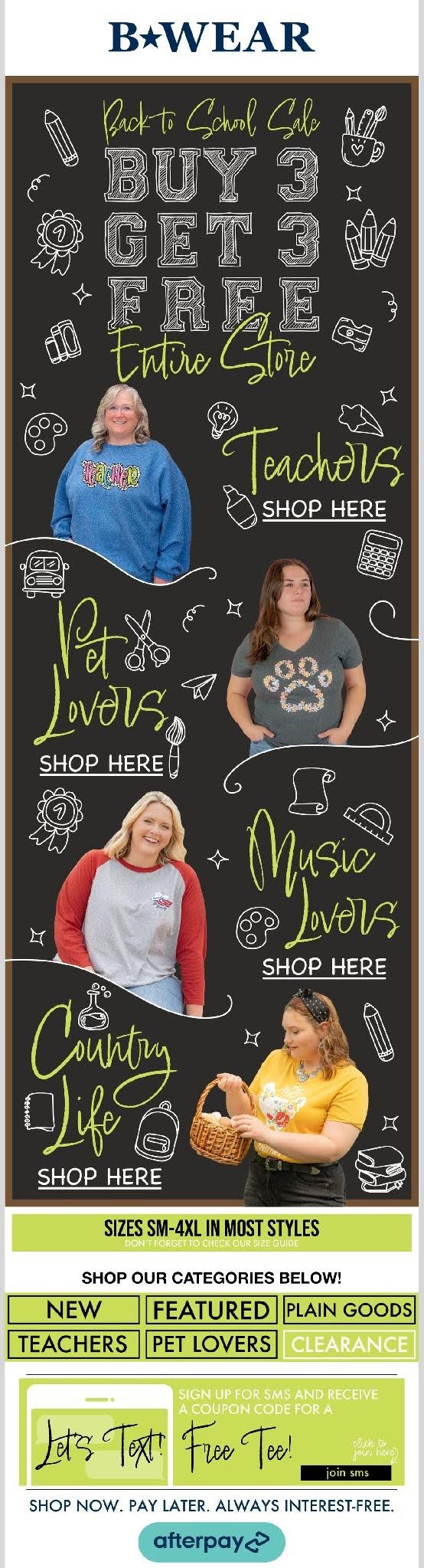
Parents, teachers, and students do not all shop for the same back-to-school products. Instead of sending everyone the same email, organize your campaign around different shopper groups.
B-Wear uses a single back-to-school sale but divides the email into sections for Teachers, Pet Lovers, Music Lovers, and Country Life. Each section has its own image and links shoppers to products that match their interests. An even better approach would be to use email segmentation and send different campaigns to different audiences based on their interests.
How to apply it:
- Create separate sections for different customer groups or interests
- Feature the products that each audience is most likely to buy
- Keep the main campaign the same and update each section for the audience you want to reach
Case study — B-Wear Sportswear
B-Wear drives 40% of its sales through Omnisend, with a 66% conversion rate on its welcome series. Read the full case study.
Put a deadline on your back-to-school sale
Example: Rachel Riley, “Back to School Essentials Flash Sale”
Rachel Riley combines a simple discount with a clear end date to encourage shoppers to act before the sale ends:
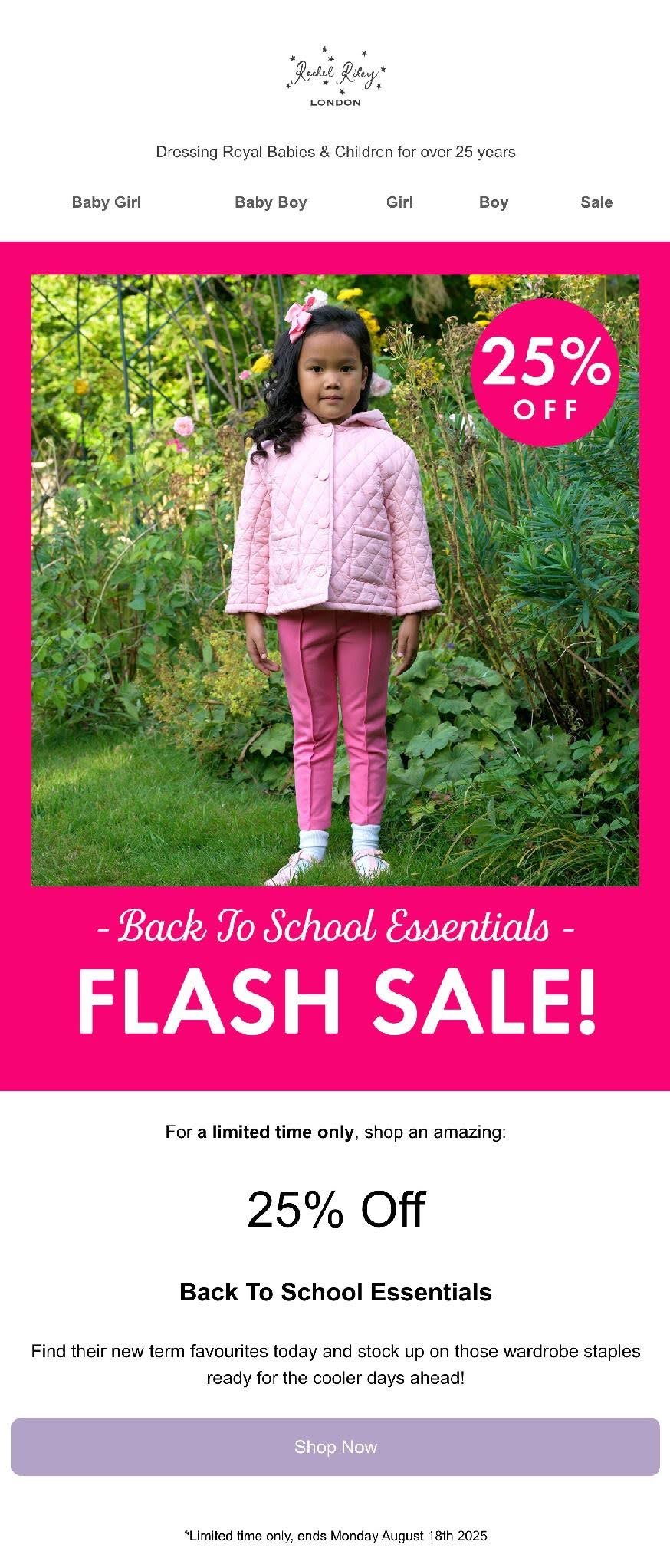
A limited-time offer gives shoppers a stronger incentive to buy rather than wait. Rachel Riley uses this approach in its flash sale email on back-to-school essentials. The email highlights a 25% discount and tells shoppers exactly when the promotion ends.
If you want to use this back-to-school email marketing strategy, choose a simple sale theme, promote one discount, and include a clear closing date. Keep the design consistent with your brand so the promotion still feels familiar to customers.
How to apply it:
- Build your sale around a clear theme, such as back-to-school essentials
- Highlight one discount and include a clear end date
- Keep the design consistent with your brand throughout the campaign
Case study — Rachel Riley
Rachel Riley grew its Black Friday Cyber Monday revenue 77.33% year over year, with automations driving 46% of its Omnisend revenue.
“Our order confirmation automation alone has become a powerful revenue driver” — Jacqueline Love, Ecommerce and Wholesale Manager, Rachel Riley
Read the full case study.
Position your products as back-to-school essentials
Example: INGLOT Canada, “Back to School Sale”
INGLOT Canada shows that almost any product can fit into the back-to-school marketing season with the right message:
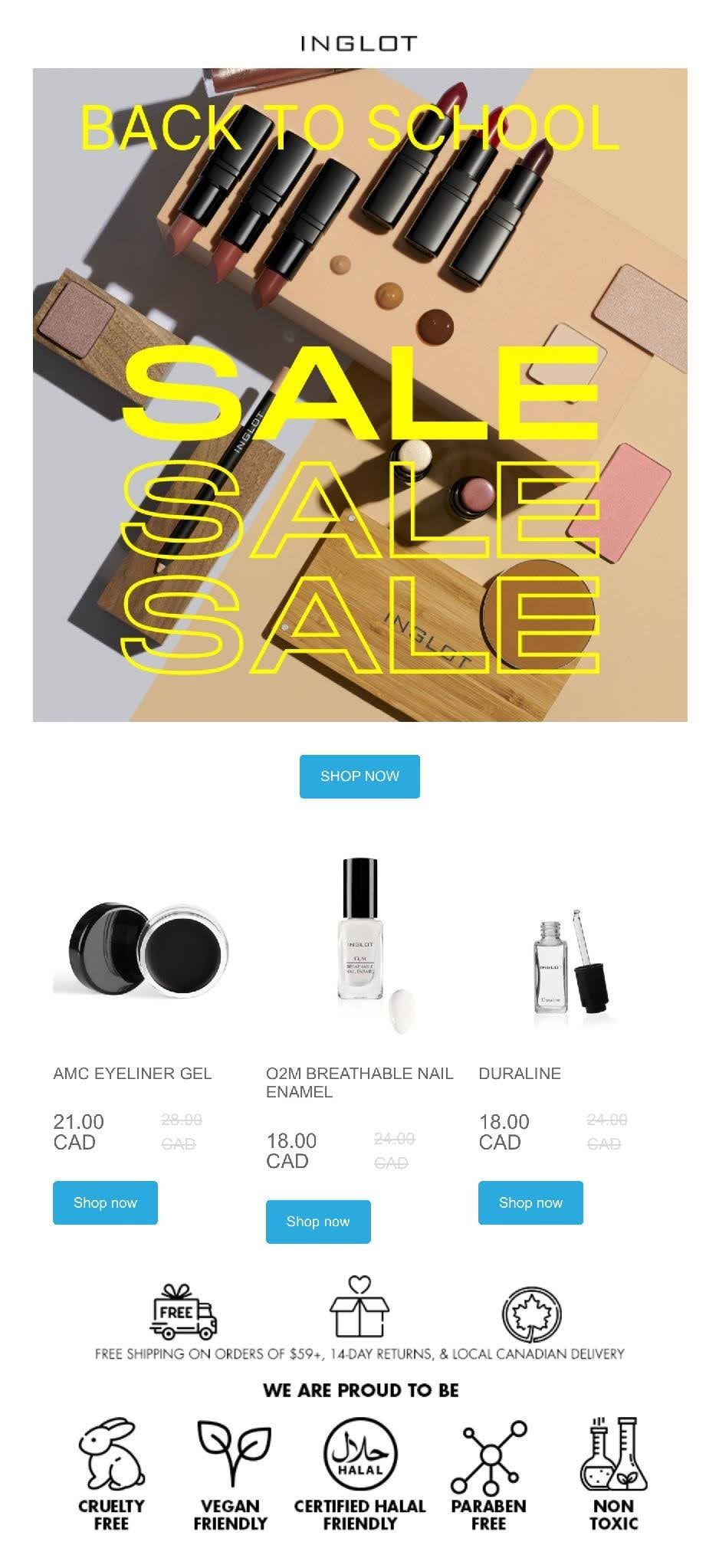
Back-to-school shopping is not only about books, bags, and stationery. Many shoppers also buy products that help them feel ready for a new school term. That is why back-to-school advertising can work for brands outside traditional school categories.
INGLOT Canada ties its beauty products to the season with a simple sale, clear prices, and trust badges. If you want to use this idea in your email campaigns, give your products a back-to-school angle, include a clear offer and product details to make buying easy.
How to apply it:
- Show how your products fit the back-to-school season
- Lead with one seasonal message and one clear offer
- Add product details and trust signals
Case study — INGLOT Canada
INGLOT Canada earns a 117% higher conversion rate on cart-recovery workflows that pair email with SMS and push, now 8% of its yearly email revenue. Read the full case study here.
Bundle the back-to-school shopping list
Example: Converse, “Back to School Bundle Up & Save”
Converse makes back-to-school shopping easier by grouping related products into one offer:
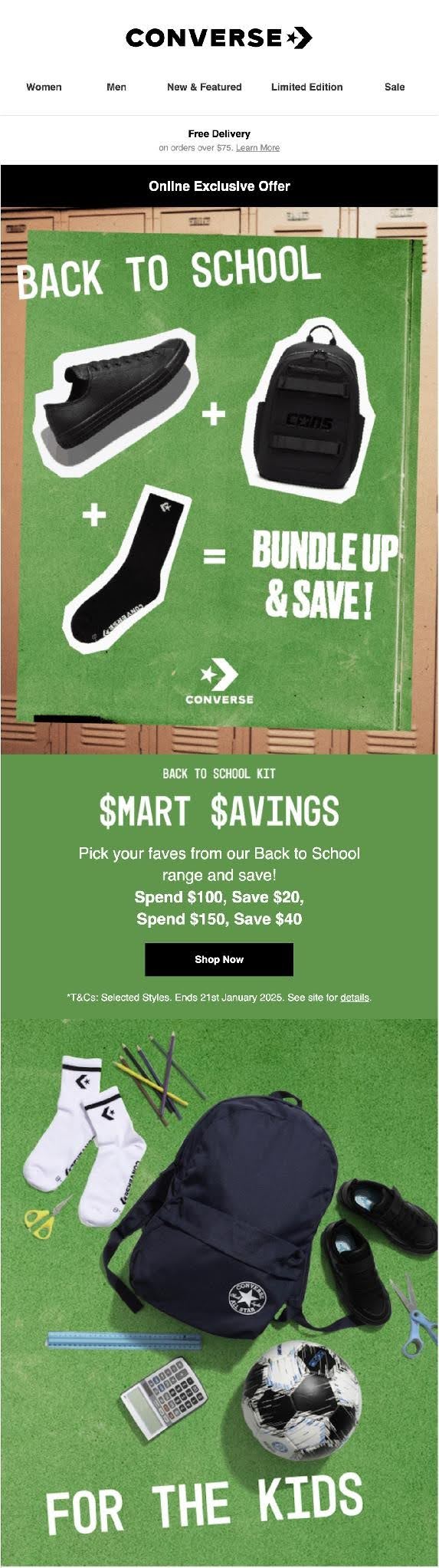
Product bundles help shoppers buy everything they need in one order. They also encourage customers to spend more while increasing their average order value.
Converse brings together shoes, a backpack, and socks, then rewards higher spending with a tiered discount. You can build a similar campaign with a back-to-school template and make the savings easy to spot.
How to apply it:
- Group products that shoppers often buy together
- Show the savings clearly so customers can see the value
- Add a spend-and-save offer to increase order value
Start your back-to-school emails early
Example: Cuisinart, “Back-to-School Savings Start Now”
Cuisinart opens early with an after-school theme, dollar-off deals, and a sale-ends date:
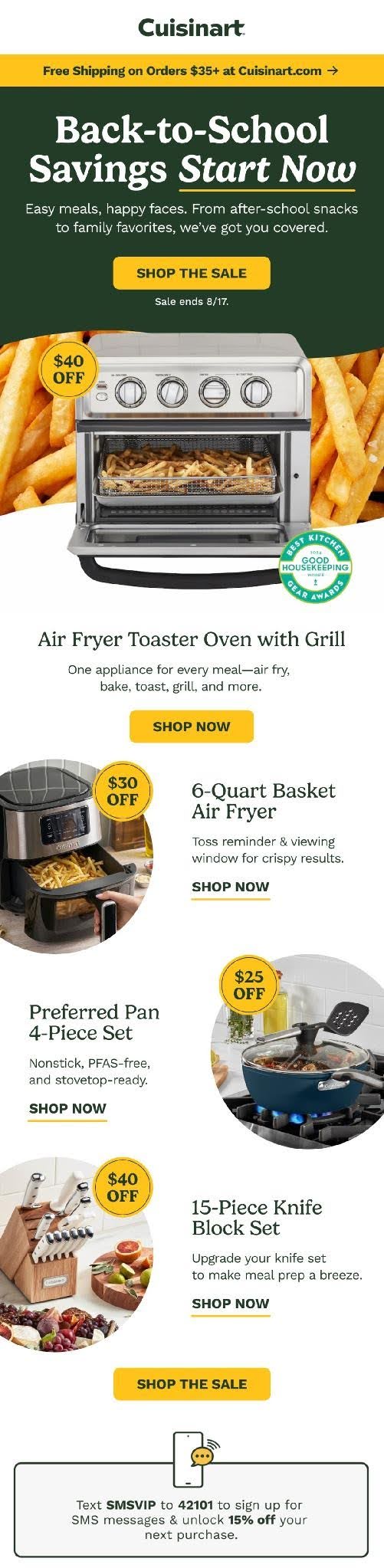
Starting early gives your back-to-school marketing campaign a better chance of getting noticed before inboxes become crowded. It also gives early shoppers enough time to plan their purchases.
Cuisinart starts the season with an after-school theme, dollar-off offers, and a clear sale end date. The email also includes an SMS sign-up section to grow its contact list. With email automation, you can schedule these emails and follow-up messages throughout the season.
How to apply it:
- Launch your back-to-school marketing campaign in June or early July
- Include a clear sale end date to encourage early purchases
- Add an SMS or email sign-up section to grow your audience
Lead your back-to-school email with lifestyle
Example: Crocs, “The Best Back to School Hack”
Crocs uses lifestyle images to help shoppers picture its products in everyday school life:
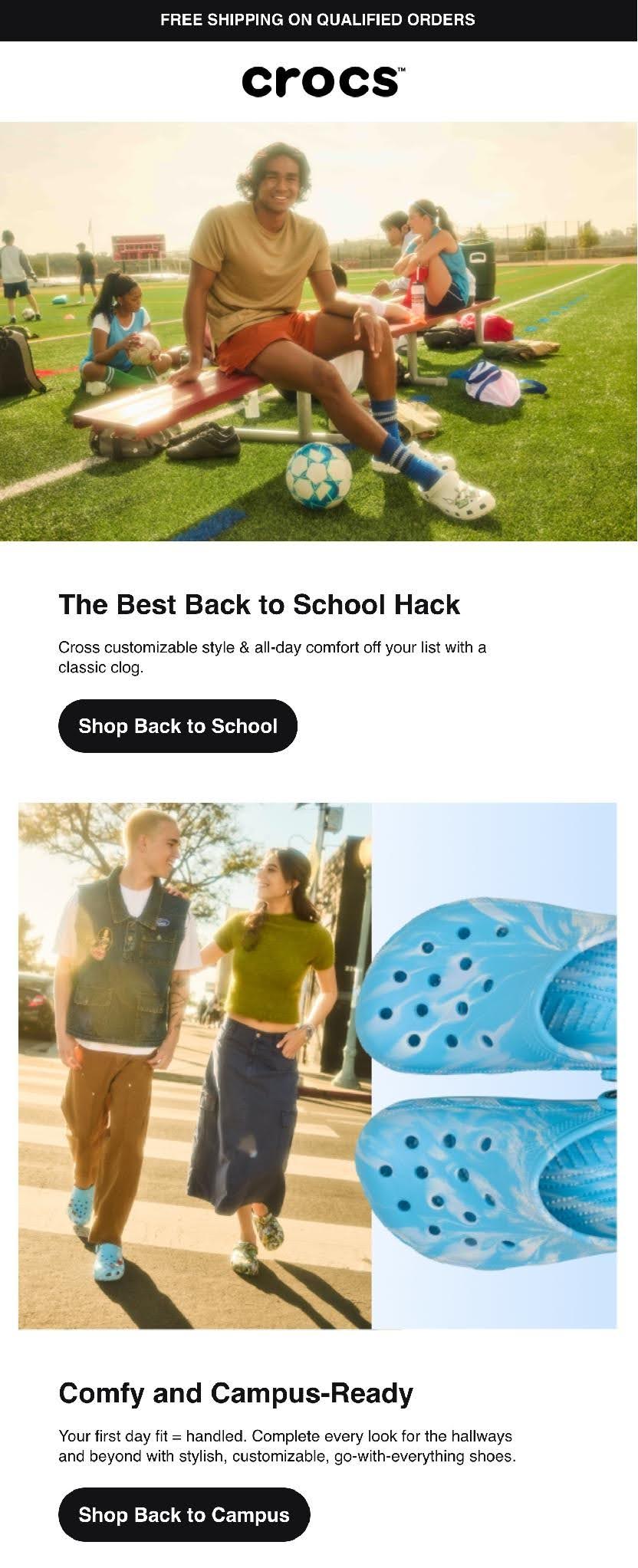
People are more likely to buy when they can picture a product in their daily lives. Crocs uses students, campus scenes, and everyday activities to show where its footwear fits.
This style of email branding makes the campaign feel more authentic and memorable. It is also one of the most effective back-to-school promotion ideas because it sells the experience, not just the product.
How to apply it:
- Use real-life school scenes to tell a story
- Show your products being used instead of displaying them on their own
- Keep the visuals consistent with your brand identity
Back-to-school trends for 2026
Back-to-school shopping keeps changing as families adjust when, where, and how they buy. These 2026 trends can help you plan stronger back-to-school marketing strategies and build campaigns that match today’s shoppers.
Value beats brand loyalty
According to the 2026 Deloitte Back-to-School Survey, while 57% of parents prefer to shop for school supplies online, competition is fierce. Economic uncertainty turns parents into hyper-value seekers, with 71% of survey respondents willing to switch brands to make every dollar count. As a result, brands should focus on bundling core back-to-school items and making discounts more prominent in communication.
Kids call the shots, parents pay the bills
According to PwC’s 2026 back-to-school poll, 58% of parents say their children influence what they buy for school. The survey also found that 61% of parents let their children add products to online shopping carts.
In your back-to-school marketing emails, use simple layouts, clear images, and familiar products that appeal to both parents and children.
AI is now a back-to-school channel
PwC found that 73% of families plan to use AI while shopping for school this year. About 23% will use it to compare prices or find deals. So make your content easy to scan so shoppers can find the information they need.
Social is a discovery channel
23% of parents plan to shop through social media or influencer recommendations, according to PwC. Your emails and social posts should support each other with the same offers and messages. This is one of the easiest back-to-school campaign ideas to put into practice.
The season’s cost runs past supplies
PwC found that families expect to spend about $635 each month on recurring costs once school starts, including $260 on school fees and $235 on meals and snacks. Brands outside the school-supplies category, such as INGLOT Canada, can stay relevant throughout the season.
How to build a back-to-school email campaign
You can build a back-to-school campaign in Omnisend in under an hour. Watch Omnisend’s back-to-school campaign tutorial for easy-to-apply marketing tips:
Then, follow the steps below to launch your back-to-school campaign.
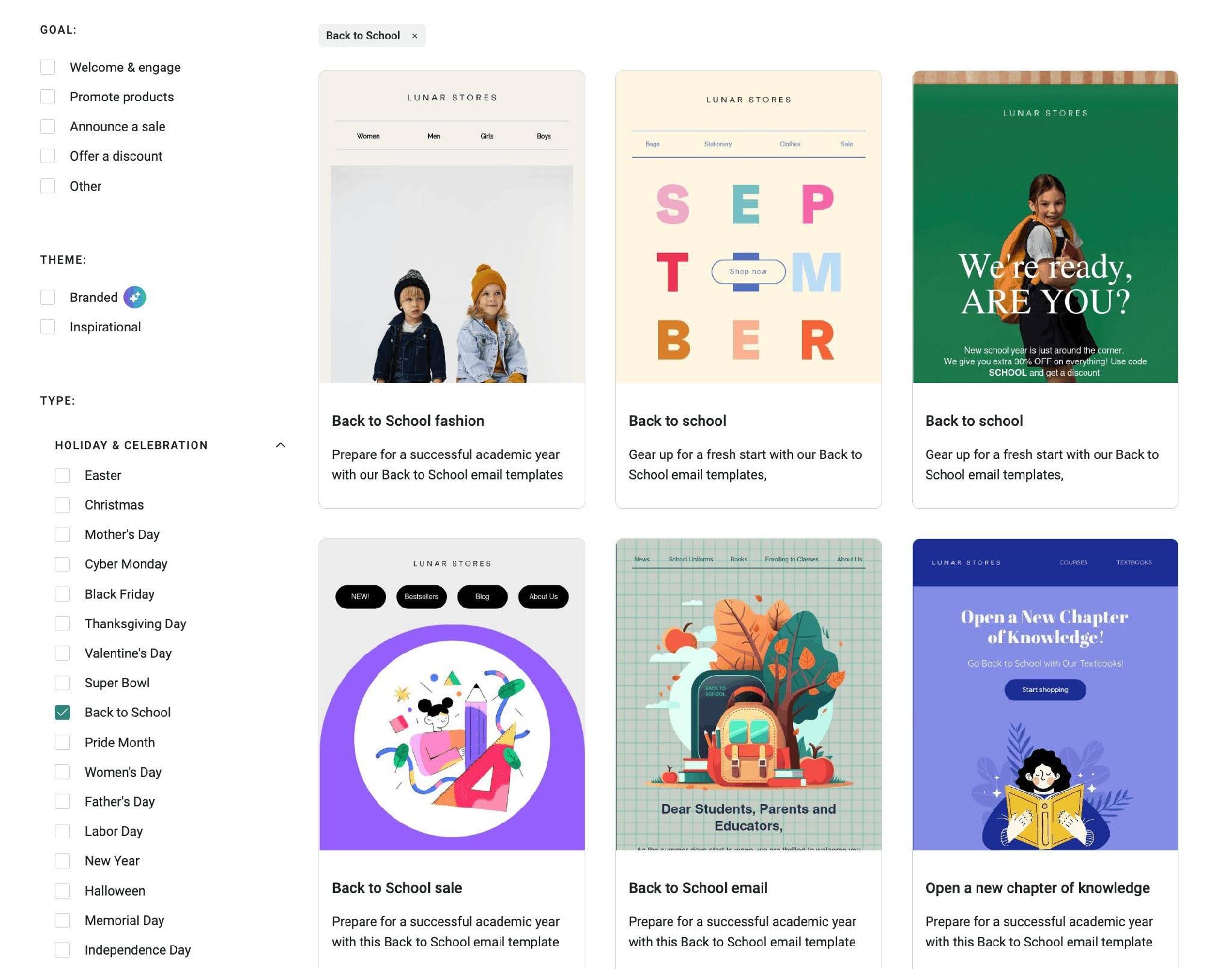
Pick a back-to-school template
Start by choosing a back-to-school template that matches the type of email you want to send. Picking a layout first saves time because most of the design work is already done:
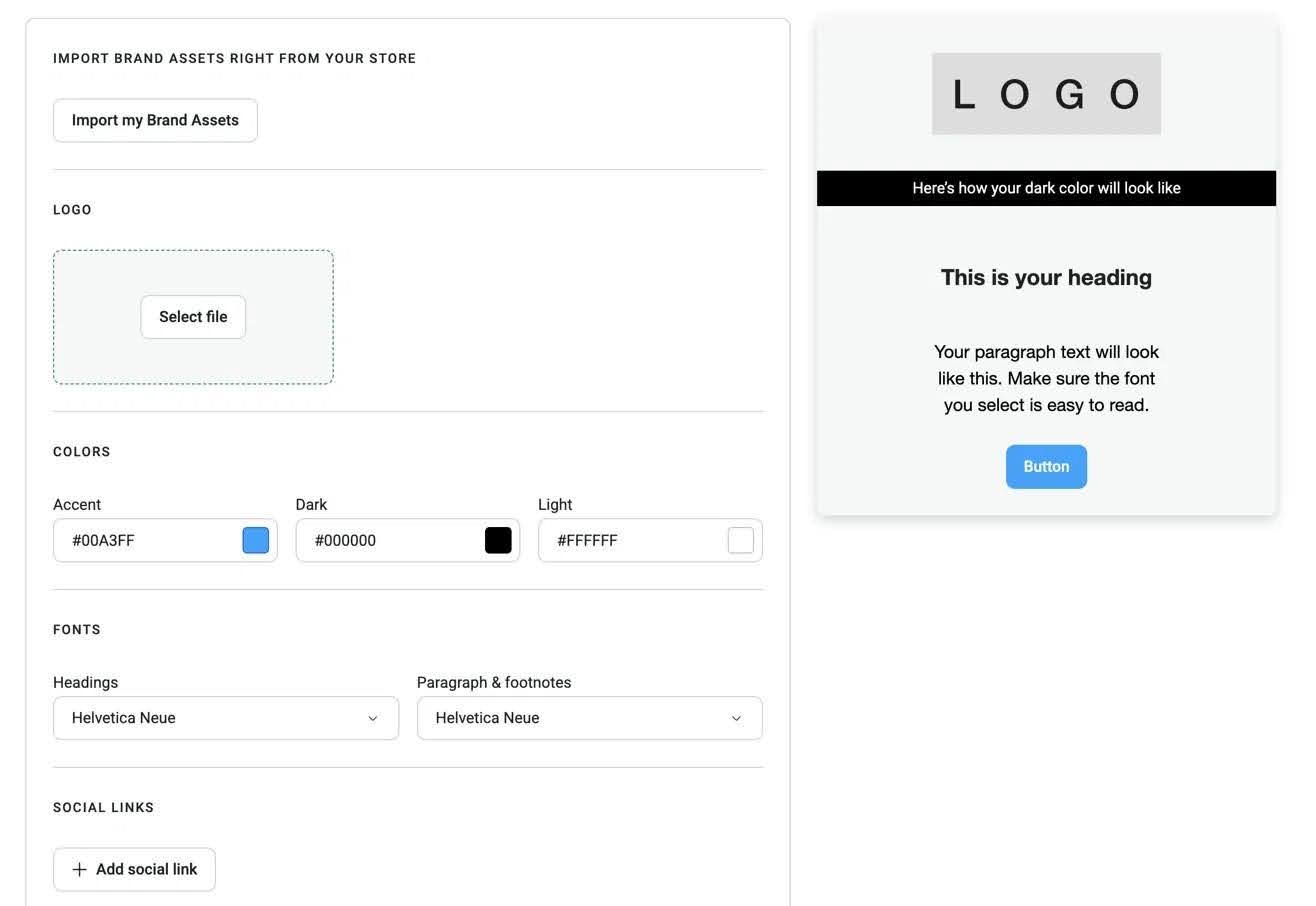
Set up your brand kit
Add your logo, brand colors, fonts, and social media links in the Brand Assets section. Omnisend automatically applies these details to your templates, so every email matches your brand:
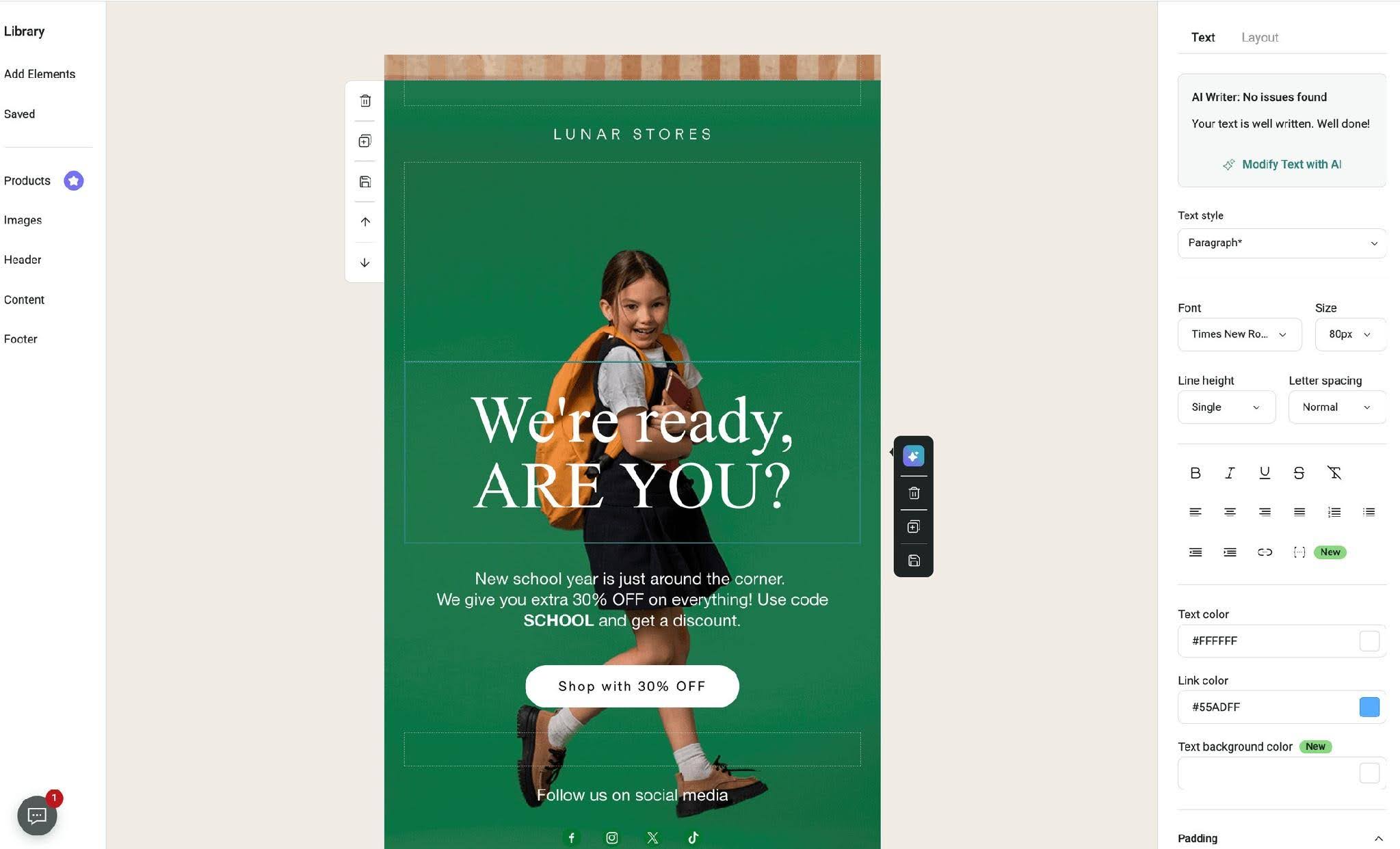
Build the email
Keep the layout simple and easy to read. Add a seasonal banner, an offer, a discount code, featured products, and a call to action button. Build everything with the drag-and-drop editor and make sure the email looks good on both desktop and mobile:
Plan the season’s campaigns
Create a schedule that covers the season for your back-to-school marketing campaigns before you start sending emails.
| Period | Shopper moment | What to send |
|---|---|---|
| June | Early browsers, list-building | Share new arrivals, launch a welcome series, and use sign-up forms to attract new subscribers |
| Mid-July | Shoppers compare prices and look for the best deals | Launch a discount email, feature product bundles, and run a giveaway |
| August | Shopping activity reaches its peak period | Sale reminders, cart recovery, and back-in-stock |
| Early September | Last-minute rush | A last-call email and SMS, then post-purchase follow-ups |
Capture demand with sign-up forms
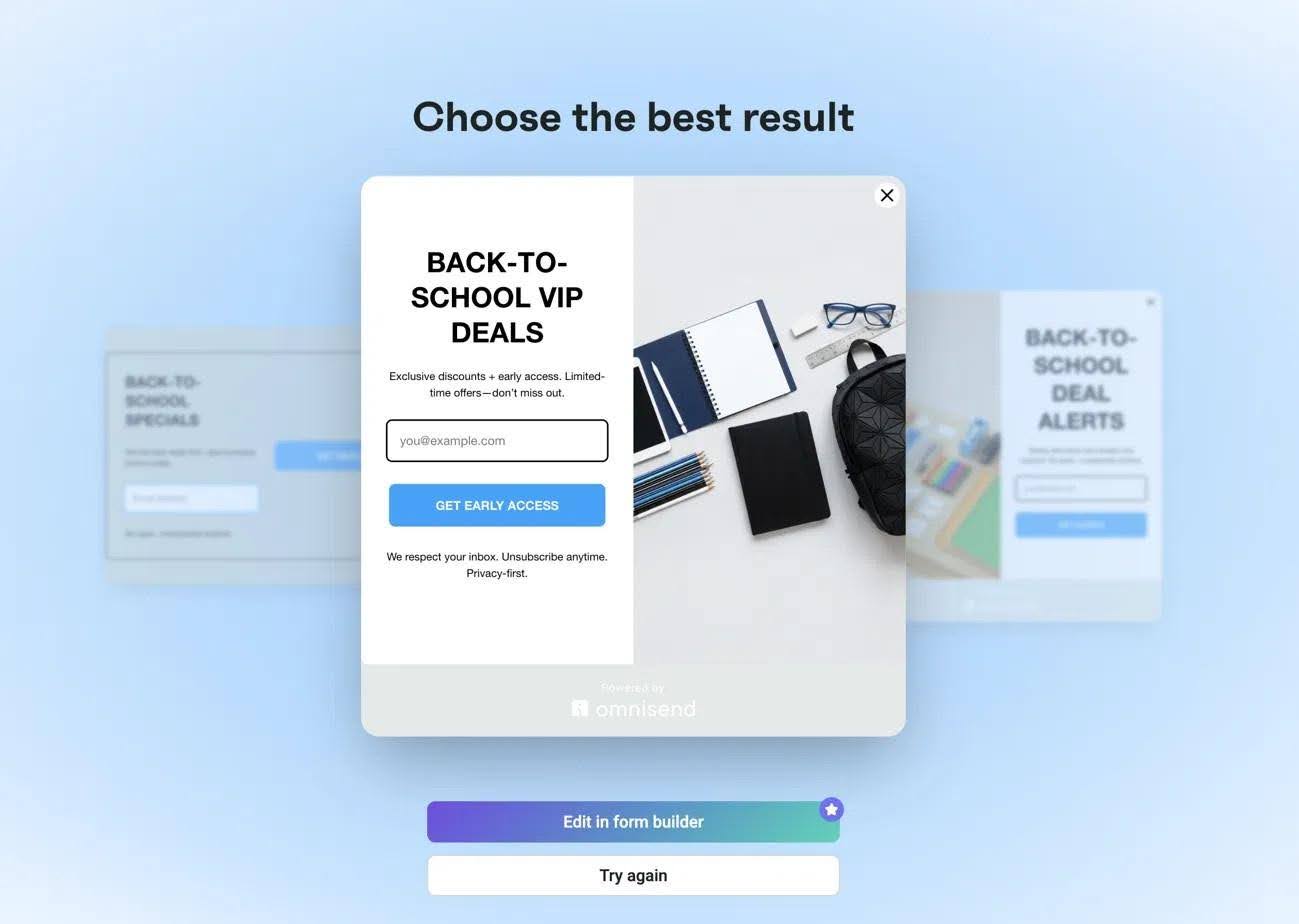
Use forms and popups to collect emails before the season, following pop-up best practices. Paid Omnisend plans also allow you to create pop-ups with AI. Simply describe the type of pop-up you want, and the platform will generate the design and copy for you:
Turn on the core automations
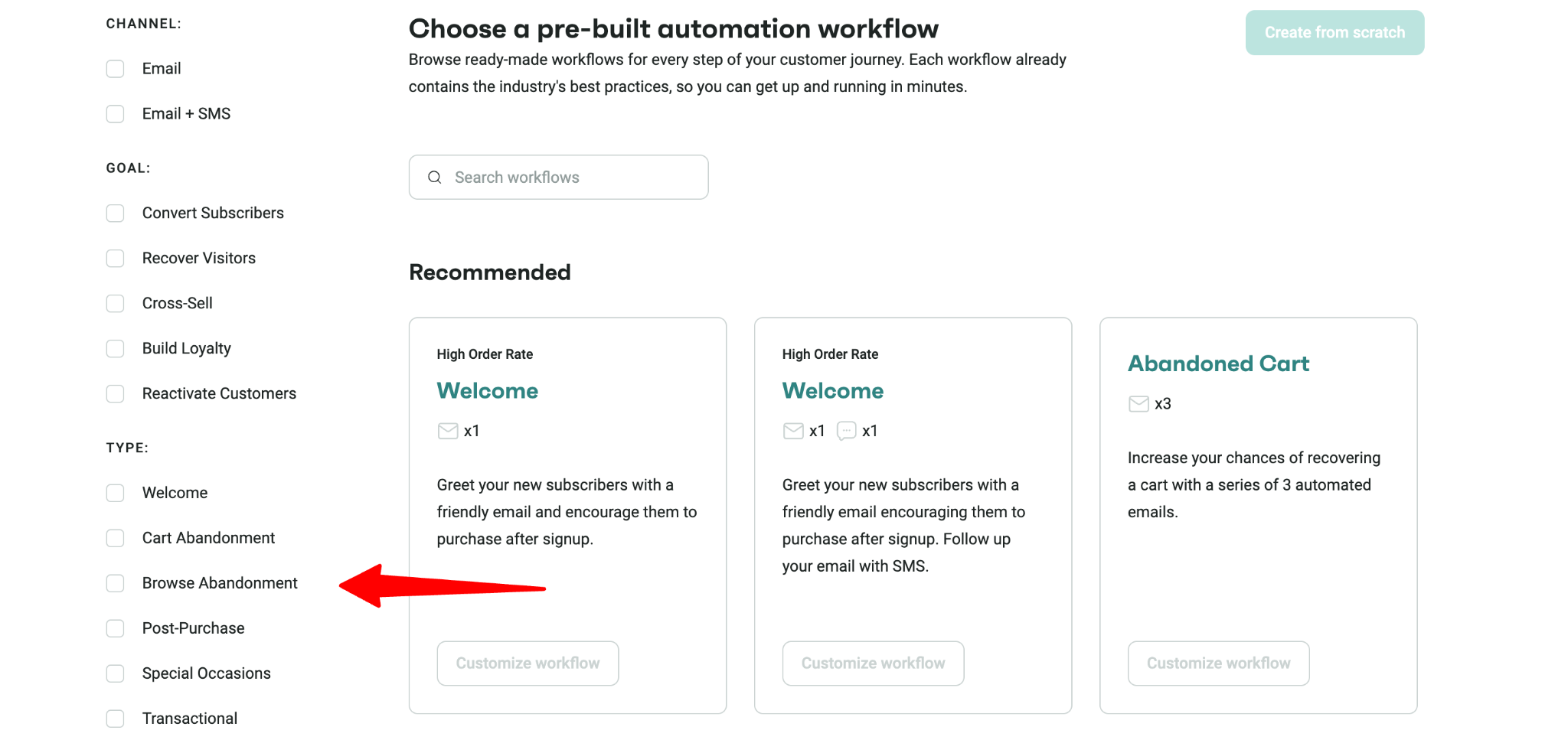
Set up the automations that will run throughout your campaign. Start with a welcome email for new subscribers, then activate abandoned cart and post-purchase workflows. Use Omnisend’s ready-made automation templates, update the timing, content, and branding before turning them on:
Segment, preview, and schedule
Use segments to organize your subscribers by where they are in the customer journey. Omnisend includes ready-made segments, and you can also create back-to-school audiences with standard filters:
| Segment | Type | How it’s built | Use it for |
|---|---|---|---|
| First-time buyers | Pre-built preset | Ready to use | A welcome offer and first-order nudge |
| Repeat customers | Pre-built preset | Ready to use | Early access to the back-to-school sale |
| Past back-to-school buyers | Custom | Placed an order last year in the back-to-school window | A returning-shopper early offer |
| Category interest | Custom | Viewed or ordered a relevant product or collection | The matching shop-by-interest block |
| Cart abandoners | Custom | Added to cart, no order | A reminder with the deadline |
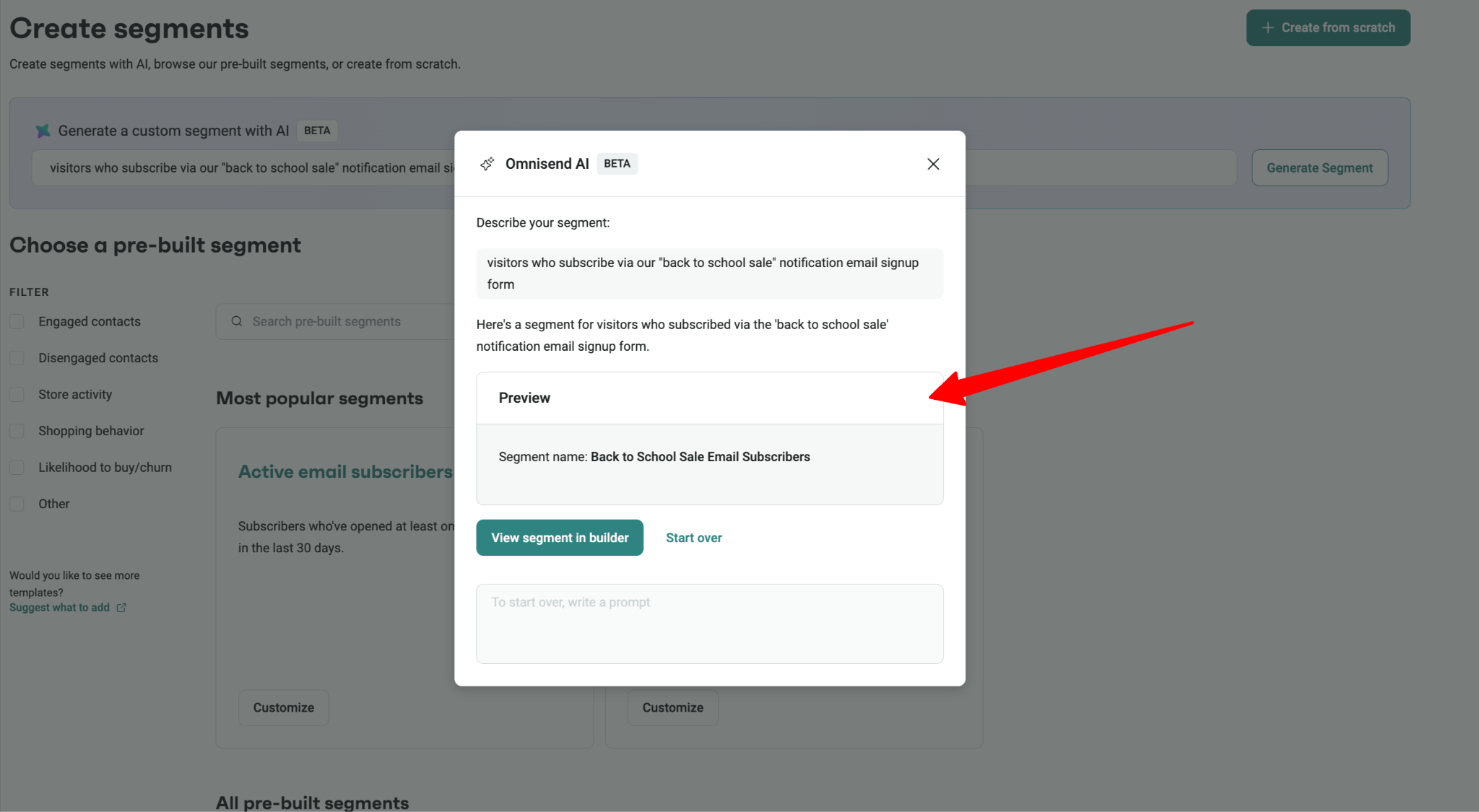
Pro tip: Use the AI segment builder if you’d rather describe your audience in plain words:
Back-to-school marketing FAQs
1. When should back-to-school campaigns start?
Start your back-to-school marketing campaigns in June. This gives you time to reach early shoppers before competition increases and to keep customers engaged through August.
2. How long should a back-to-school promotion run?
Run your promotion for six to eight weeks. This covers early shoppers, peak buying in July and August, and last-minute purchases.
3. What are the top-performing channels for back-to-school marketing?
Email works well for promotions, while SMS is ideal for time-sensitive offers. Automated cart recovery and post-purchase emails also help increase sales.
4. How can non-school brands participate in the season?
Connect your products to back-to-school needs with seasonal messaging, product bundles, as well as limited-time offers that fit the shopping season.
5. What types of emails work best for back-to-school?
Use welcome emails, sale announcements, product bundles, abandoned cart reminders, flash sales, and post-purchase emails to keep shoppers engaged throughout the season.
6. What back-to-school marketing tactics drive the most sales?
Start your back-to-school marketing campaign early, group products into bundles, add a clear deadline, and segment your audience. These tactics help shoppers find relevant offers and encourage them to buy sooner.