How Cloud Contact Centers Work
A hosted call center is a contact center infrastructure managed and maintained off-site by a third-party cloud provider. Instead of owning servers, software licenses, and physical hardware, your team accesses call routing, IVR, omnichannel tools, and analytics through a secure cloud connection. The provider handles uptime, security, and updates, allowing your agents to work from wherever they are.
This model has replaced on-premises call center deployments for most businesses under 1,000 seats because the total cost of ownership is lower and the feature set, including AI-powered features like real-time assist, now matches or exceeds what legacy hardware can deliver.
Historically, call centers required substantial investments in hardware and software, alongside complex maintenance. Agents were tied to physical workspaces with limited flexibility. Today, hosted call center platforms overcome these challenges by offering essential communication tools through the cloud on a flexible subscription basis.
What Is a Hosted Call Center?
A hosted call center is a customer service environment operated externally by a third-party provider and accessed remotely. It eliminates the need to install hardware and software on-site; instead, you access essential call center tools and functions via a secure cloud service.
Think of it as renting a fully equipped cloud contact center, ready to use whenever you need it.

Customers now demand omnichannel support and expect to reach you on their preferred platform (phone, email, social media, or even messaging apps), and hosted call centers empower businesses to meet these demands effortlessly.
Hosted call centers now also offer cloud-native AI for data processing using machine learning models, providing advanced features such as sentiment analysis and automated call summaries for advanced calling needs.
Although these terms are used synonymously in everyday language, a hosted call center and a hosted contact center differ technically from one another. Understanding this distinction helps you select the right technology for your customer experience strategy.
| Feature | Hosted call center | Hosted contact center |
|---|---|---|
| Primary channel coverage | Focuses almost exclusively on voice (inbound/outbound calling). | Comprehensive omnichannel support (voice, email, chat, SMS, social media). |
| Core infrastructure | Off-site servers handling phone routing, IVR, and basic queue management. | Off-site servers running unified data architectures, cross-channel state tracking, and advanced integrations. |
| AI capabilities | Automated call transcripts, basic voice interactive voice response (IVR). | Real-time agent coaching, sentiment analysis across all digital channels, and intelligent virtual agents (IVAs). |
| Best for | Businesses that primarily interact with customers via traditional phone calls. | Brands looking for a unified hub to manage holistic, multi-channel customer journeys. |
You may also encounter the term “cloud contact center.” While a hosted solution means that your software runs on a dedicated, external server managed by a provider, a cloud-native solution uses a shared, distributed public cloud infrastructure (such as AWS or Google Cloud). Today, the distinctions have largely blurred under the term Contact Center as a Service (CCaaS); this model combines the high security of hosted solutions with the virtually unlimited scalability of the cloud.
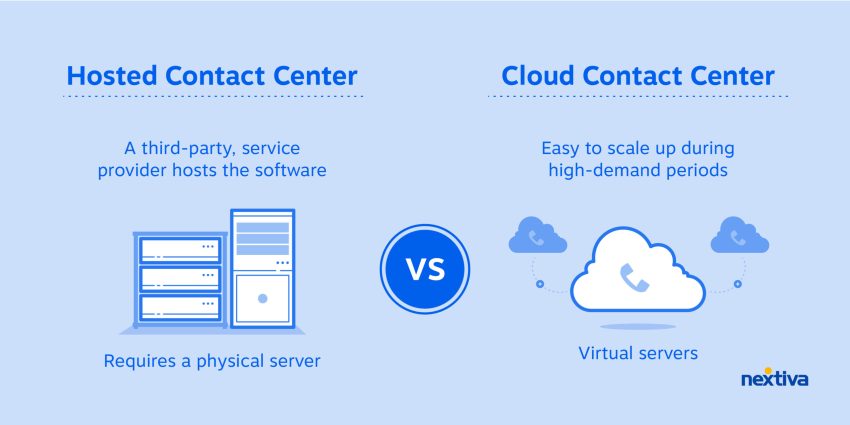
Note: We’ll use both the terms hosted call center and hosted contact center interchangeably throughout the article.
How a Hosted Call Center Works
A hosted call center outsources your customer communication infrastructure to a third-party service provider. So instead of owning and maintaining your own hardware and software, you rent access to it from the provider’s secure data center or cloud platform.
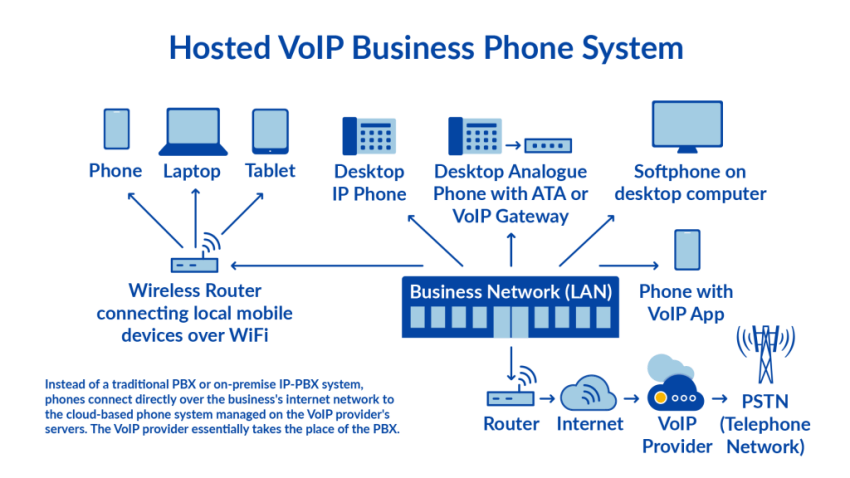
Here’s what you need to run a hosted service:
- The cloud infrastructure: Servers, telecom switches, and telephony software are housed securely in the vendor’s data centers. You don’t need copper phone lines or bulky PBX hardware in your building.
- The agent interface: Agents use softphones integrated directly into their computers or web browsers to place and receive calls. They can work anywhere with a reliable internet connection.
- Intelligent routing: Incoming traffic hits the vendor’s automatic call distribution (ACD) software. Configurable algorithms instantly check agent availability, skills, and priority status to route the caller to the best possible representative.
- Integrated applications: Via a unified browser dashboard, agents access communication controls alongside software integrations like customer relationship management (CRM) tools, help desks, and team chat.
The vendor hosts the platform off-site while the business manages the agents, call routing strategies, and reporting through easy-to-use web interfaces. This provides businesses with more flexibility and time to focus on customers.
Benefits of a Hosted Call Center
Hosted service providers offer the latest call center technology at an affordable price point for even small and midsize businesses. Hosted call center software offers powerful benefits compared to traditional on-premise call center software, such as the following.
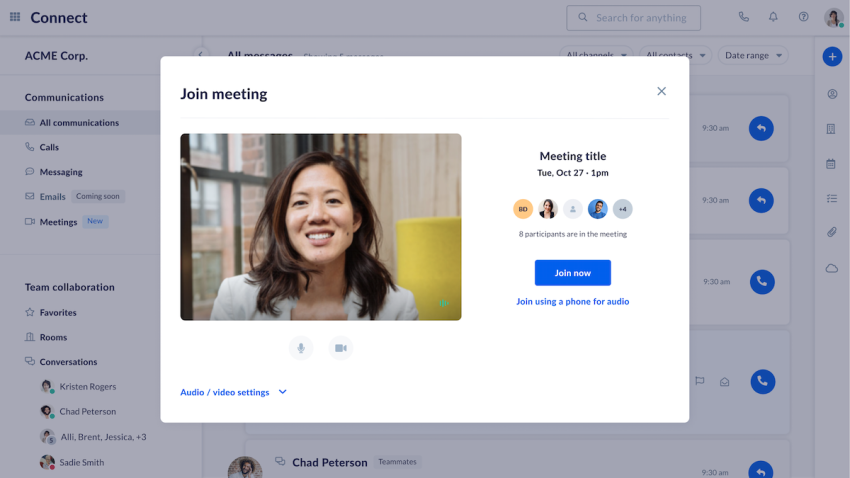
1. Contact center virtualization
The days of a busy, noisy contact center in a single physical location are long gone.
Hosted contact centers use the cloud rather than relying on physical infrastructure and copper wires. Your agents can access their workstations from anywhere with an internet connection.
This makes them extremely flexible, facilitating remote work and supporting agents on the go.
2. Better visibility into call center metrics
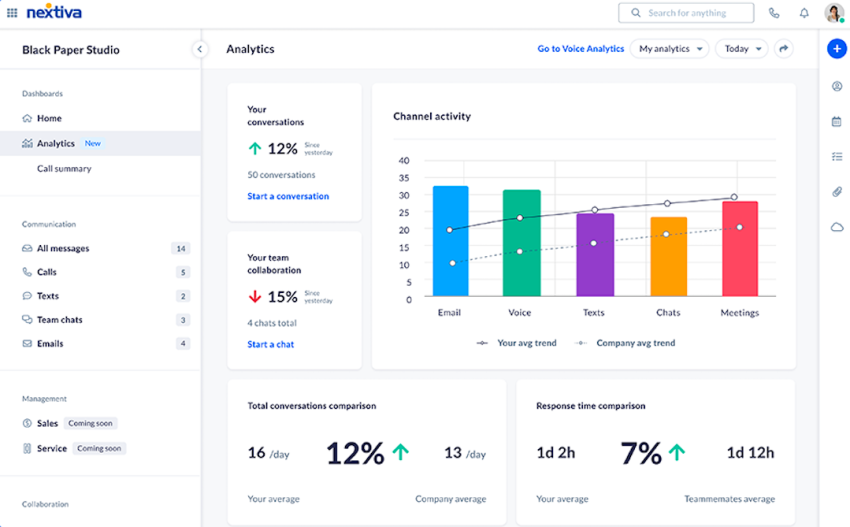
Hosted call center features are designed for handling high call volumes across distributed teams and include:
- Call queues to efficiently route and manage incoming calls
- Call recording, monitoring, and whisper capabilities
- Real-time agent dashboard showing availability status
- Easy ad-hoc and scheduled call transferring
- Built-in team chat and collaboration
Supervisors gain better visibility into call center KPIs like handle time, abandonment rate, and first call resolution to optimize operations.
3. More personalized customer experiences
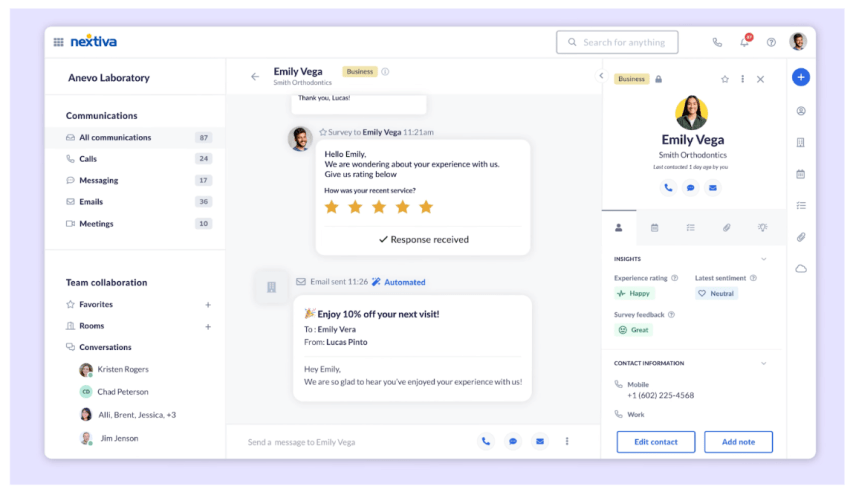
Hosted call centers simplify integration using APIs. This includes connecting your phone system to CRM platforms like Salesforce to automatically retrieve customer records during incoming calls. Integrations centralize data from various systems, creating a unified data foundation.
Personalization today means contextual continuity. Roughly 75% of millennial consumers actively avoid traditional phone calls because they find them too time-consuming, which underscores why the jump from a voice-only hosted call center to an omnichannel contact center is inevitable.
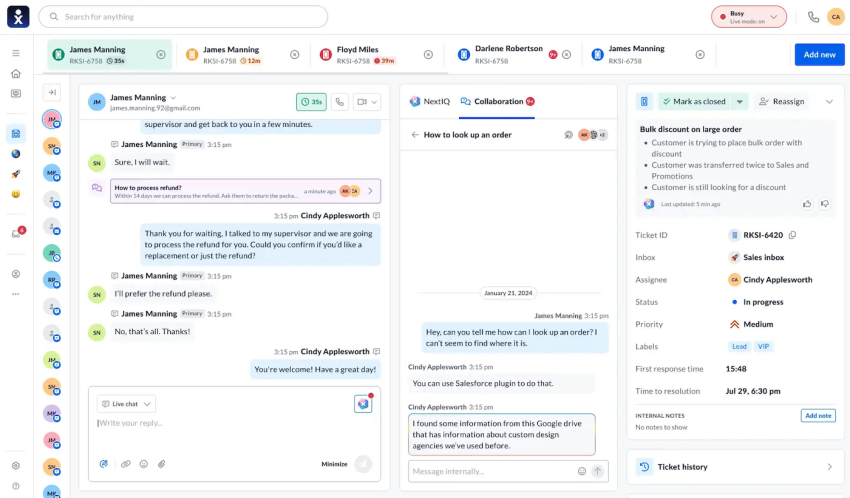
Hosted platforms now use omnichannel presence. This means that if a customer switches from a chatbot to a live agent, the agent immediately sees the complete transcript, previous interactions, and customer journey. This enables personalized and satisfying customer experiences.
4. Efficient segmentation of voice traffic
Interactive voice response (IVR) provides automated self-service options to customers using voice prompts or natural language interfaces. This deflects common inquiries away from live agents.
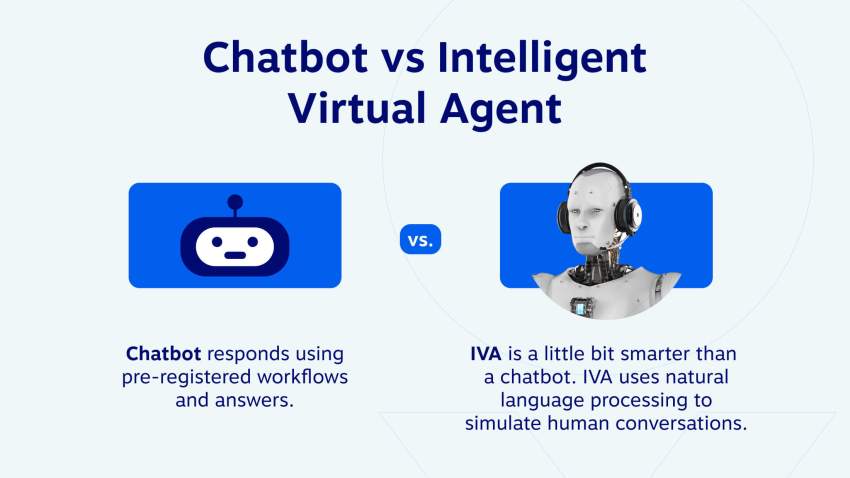
Other intelligent features, like intelligent virtual agents (IVAs), use natural language processing (NLP) to understand complex requests, allowing customers to speak naturally instead of pressing numbers. Intelligent call routing assigns callers to agents based on configurable rules and criteria. For example, Spanish speakers could be routed to bilingual agents.
These capabilities allow efficient segmentation of voice traffic to drive faster responses and higher satisfaction.
5. Cost efficiency and scalability
The total cost of ownership and ROI of a hosted call center is far more attractive compared to legacy on-premise systems requiring costly hardware and maintenance:
- No upfront infrastructure/equipment costs
- Usage-based pricing that flexes with demand
- Built-in redundancy and failover
- Effortless scalability for seasonal peaks
- Access to the latest software updates and features
6. Actionable reporting and analytics
Robust reporting provides visibility into contact center performance and trends over time:
- Traffic volume patterns
- The average speed of answer
- Handle time distribution
- First-call resolution (FCR) rates
- Customer satisfaction (CSAT) metrics
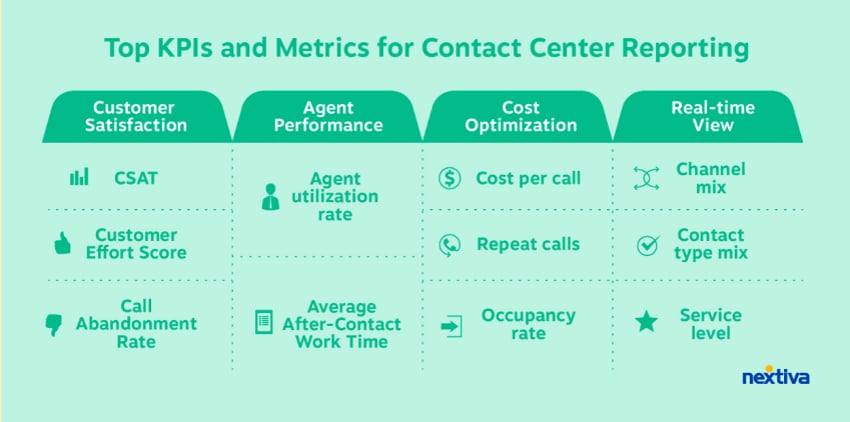
These insights guide operational changes to enhance efficiency while improving the customer experience.
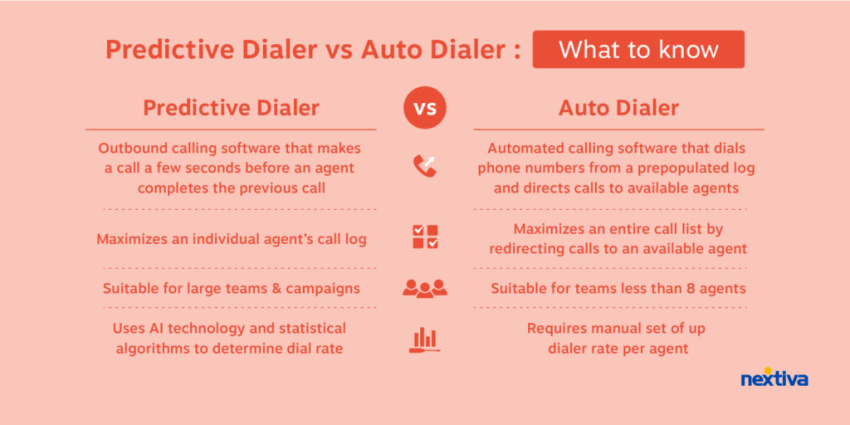
7. More precise outbound calling campaigns
Hosted call centers can efficiently orchestrate outbound calls to specified leads or contact lists.
After auto-dialing numbers, qualified leads get connected directly with available agents. This automates previously manual and repetitive dialing tasks, allowing agents to have more productive conversations.
Today’s feature-rich hosted contact centers empower distributed teams to deliver superior, scalable customer experiences across both inbound and outbound interactions and drive better agent performance.
Top Hosted Call Center & Contact Center Vendors
When evaluating vendors, look closely at their core pricing, channel coverage, and how deeply AI is woven into their ecosystem. Leaders in this space differentiate themselves by how seamlessly they reduce agent friction and preserve customer context.
| Vendor | Starting price (approx.) | Channel coverage | AI features |
|---|---|---|---|
| Nextiva | $75/user/month | Omnichannel (voice, SMS, chat, email) | Real-time sentiment analysis, live call transcription, automated conversation summaries, and contextual interaction history tracking. |
| Vonage | Varies by scale | Omnichannel via conversational commerce | AI virtual assistants, voice analytics, and customizable CRM data screen-pops. |
| Genesys Cloud CX | $75/user/month | Omnichannel | Advanced predictive routing, automated workforce forecasting, and deep conversational AI bots. |
| RingCentral | $65/user/month | Omnichannel | Agent assist cards, real-time coaching tools, and post-call automated summaries. |
| Dialpad | $80/user/month | Omnichannel | Native speech-to-text, real-time QA checklists, and built-in live agent coaching. |
How Much Does a Hosted Contact Center Cost?

The cost of a hosted call center is structured as a monthly or annual subscription per user (or seat). While prices vary based on the feature set, AI capabilities, and the number of channels, here’s a general market breakdown:
- Entry-level ($25-$75 per user/month): Ideal for smaller teams needing basic inbound/outbound voice, business SMS, and standard call routing.
- Mid-tier ($75–$120 per user/month): The sweet spot for most growing brands. Includes omnichannel support (email, chat, SMS), CRM integrations, and basic AI tools like automated transcription.
- Enterprise ($120–$200+ per user/month): Designed for high-volume contact centers that require advanced AI orchestration, workforce management (WFM), predictive dialers, and real-time supervisor coaching tools.
Hidden costs to watch for
Apart from the base subscription, keep an eye on:
- Usage fees: While many plans include unlimited domestic calling, some providers charge per minute for toll-free numbers or international calls.
- Implementation & training: Complex setups may require a one-time onboarding fee to map your IVR workflows and CRM integrations correctly.
- AI add-ons: Some advanced features, like AI agents or advanced sentiment analysis, may be priced as add-ons if they aren’t already bundled into your tier.
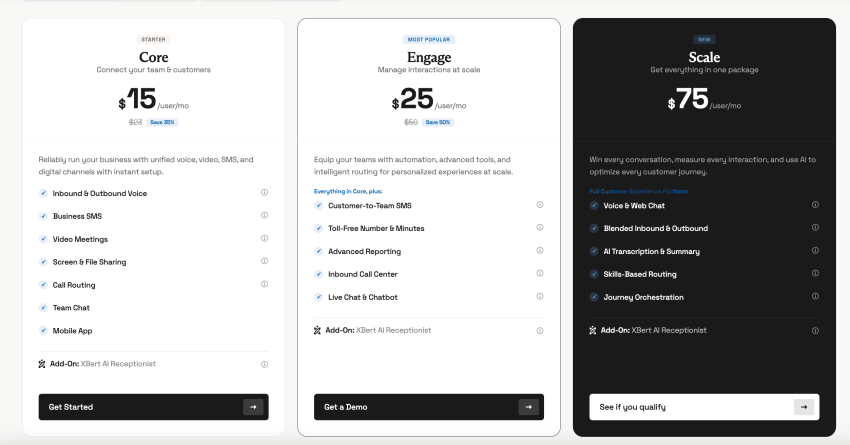
Cloud contact center software like Nextiva keeps pricing predictable by bundling high-value features. For example, the Engage plan starts at $25/mo for core inbound center needs, while the full Scale plan at $75/mo offers a complete customer experience platform — a fraction of the cost of legacy enterprise competitors who charge extra for AI transcription and journey orchestration.
Who Should Consider a Hosted Call Center?
Hosted call centers work best for businesses that need omnichannel support.
Advanced hosted platforms handle not just phone calls but also emails, chats, social media messages, and even video conferencing, enabling you to offer seamless customer service across all channels.
If you’re seeking new features and faster innovation, cloud-based providers are a great idea because they constantly update their platforms with new features and functionalities. In other words, with a hosted solution, you automatically benefit from these updates without additional investments.
And if you need advanced call center features but your resources are limited, hosted cloud call center solutions can provide sophisticated capabilities without large hardware investments or IT headcount.
The ability to scale and pay only for what you use makes it financially appealing to many smaller organizations. Startup companies can get up and running quickly without high upfront costs and easily manage fluctuating customer interactions.
Choosing the Right Hosted Call Center Provider

Ready to choose your contact center technology? You might come across some challenges and constraints related to pricing, compliance issues, security, and functionality when selecting a hosted call center.
So to make your choice easier, here are a few key factors to consider.
1. Pricing models and total cost of ownership
Look beyond just the monthly fees or upfront costs. Make sure to factor in any additional charges for integrations, storage, support, training, etc.
Plus, be sure to understand the full cost of ownership over the lifespan of the technology. Some providers offer usage-based pricing, which can scale up or down as your needs change.
2. Security measures and compliance standards
When reviewing contact center vendors, ask about their policies and procedures to protect your data. This can include a disaster recovery plan, redundant data centers, 24/7 monitoring, and real-time network status updates.
Additionally, check each provider’s certificates and compliance with regulations, including GDPR, PCI, SOC 2, ISO/IEC 27001, and any certificates relevant to your industry, such as HIPAA.
3. Features, integrations, and configurability
List the features that are non-negotiable for your business communication. Then look for an integrated omnichannel approach to manage all your communication channels and expand to new ones if you need to. Otherwise, you might have to switch to a different provider once your needs grow.
Be sure to make the most of automation and intelligent routing with IVR, automatic phone call distribution, and predictive dialers. This way, you’ll maximize agent efficiency and make your workforce management easier.
Analyze each provider’s features to double-check they offer everything you need. Consider reliability and uptime guarantees, options for geographic redundancy, and scalability add-ons.
4. Bots and AI-based automation
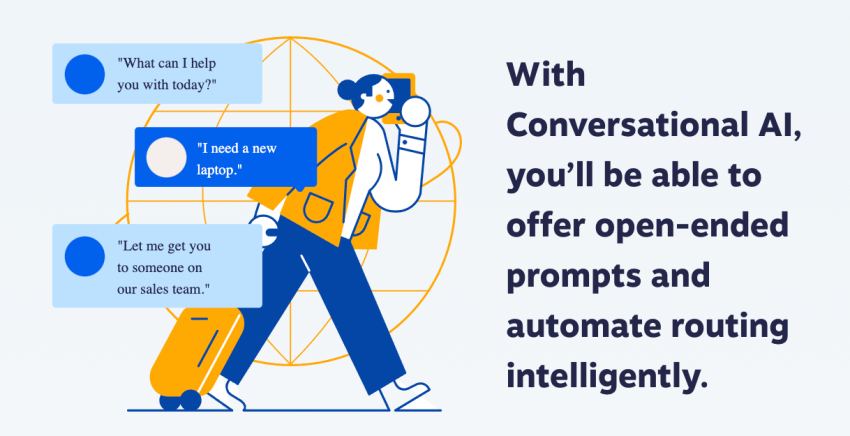
Bots and automation are here to stay. AI-based automation is the perfect match with the growing number of digital channels your customers use. With conversational AI, you can get your system to learn from each interaction and:
- Reduce hold time
- Solve customer service issues faster
- Steer calls the right agents every time
- Increase customer satisfaction
5. Customer experience and agent experience
Your software solution isn’t just about your customers but also about your agents — and these depend on each other. Customers feel that an agent’s experience impacts their customer experience, and agents feel that technology plays a key role in this. Recent industry data shows that over 80% of customers now expect an agent to know their full interaction history across all digital channels the moment the call starts.
It’s essential to consider your agents’ needs and experience too when choosing your call center solution. Agents are on the frontlines with your customers, and how you equip them matters.
Empower your agents with an easy-to-use but powerful interface and maximize their focus time by minimizing distractions and repetitive work.
Look for providers that offer real-time transcription. This allows agents to focus on the conversation rather than taking notes, with the system automatically generating a summary and next-best-action suggestions.
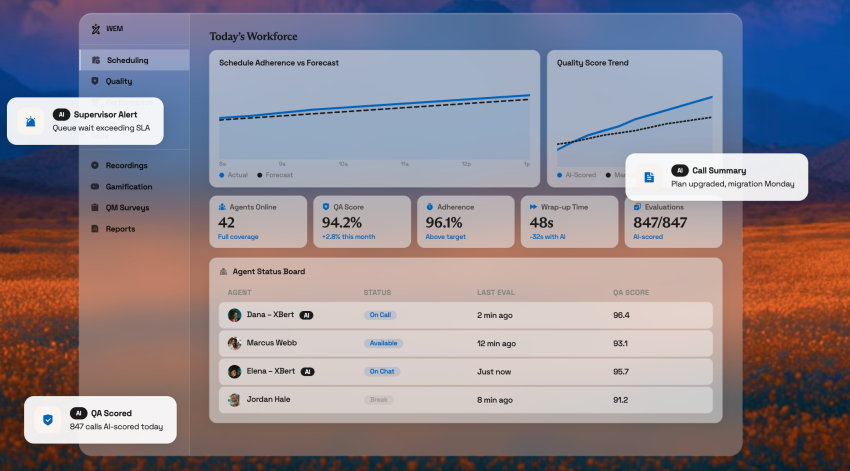
Your platform should also integrate workforce engagement management (WEM) with agent wellness tools. High-performing hosted centers now use AI to monitor agent burnout and suggest breaks during high-stress periods.
To set up a flexible cloud-based call center, you need to carefully plan your operational processes. Follow these steps for an effective implementation:
Step 1: Define volume and channel strategy
Analyze your existing customer interaction data. Identify peak call times, the number of concurrently active users, and the channels (phone, SMS, or web chat) your customers use most frequently.
Step 2: Choose your provider and tier
Select a provider that aligns with your operating budget and technical requirements. Match your goals against the respective feature packages and ensure that essential functions (such as IVR) and advanced integrations (e.g., Salesforce or HubSpot) are included.
Step 3: Architect call flows and IVR navigation
Map out your customer journey. Create an intuitive interactive voice response menu that avoids deeply nested menu structures. The goal should be to guide users to self-service options or the appropriate service agent queue within three steps.
Step 4: Configure CRM and desktop tools
Connect your hosted phone system to your CRM via API. Make sure that call forwarding automatically triggers a screen pop that displays the full customer profile, recent purchase history, and past tickets to the employee.
Step 5: Provision softphones and verify network health
Equip your employees, whether working from home or on-site, with high-quality VoIP headsets and configure their softphone software. Perform network diagnostics so your internet connection meets the bandwidth and latency standards required for clear Voice over IP (VoIP) calls.
Step 6: Conduct supervisor and agent training
Train your teams on the new workspace layout. Supervisors must understand how to view live queues, whisper coaching instructions, and pull reports, while agents need to know how to manage multi-channel workflows.
Step 7: Launch, monitor, and refine
Launch your new system and closely monitor key metrics from the outset. Use post-call customer satisfaction (CSAT) surveys and live voice analytics to incrementally adjust call routing rules and IVR scripts.
Why Try Nextiva’s Hosted Contact Center Solution
Customer support demands more than just passing a voice call down a wire. High-performing organizations use cloud-native AI to strip away manual, repetitive tasks from their workforce, allowing agents to focus entirely on the customer.
Nextiva’s hosted contact center features an intelligent hub designed for contextual continuity.
[Customer Journey] ➔ [Conversational IVA] ➔ [Live Agent + Real-Time AI Assist] ➔ [Auto-Summary]
- Real-time sentiment analysis: Nextiva’s AI analyzes live audio streams for tone, vocabulary, and stress markers. If a customer’s sentiment deteriorates, the system automatically alerts a supervisor, allowing them to monitor the call or whisper advice to the agent.
- Automated live call summaries: Instead of forcing agents to spend 3-4 minutes typing up notes after every single interaction, Nextiva’s AI automatically transcribes the conversation and generates a concise summary. This reduces post-call work (ACW) to seconds.
- Agent Assist technology: As a customer speaks, the AI uses natural language processing to understand the query and instantly pulls relevant knowledge base articles or script suggestions onto the agent’s screen, reducing search time and lowering AHT.
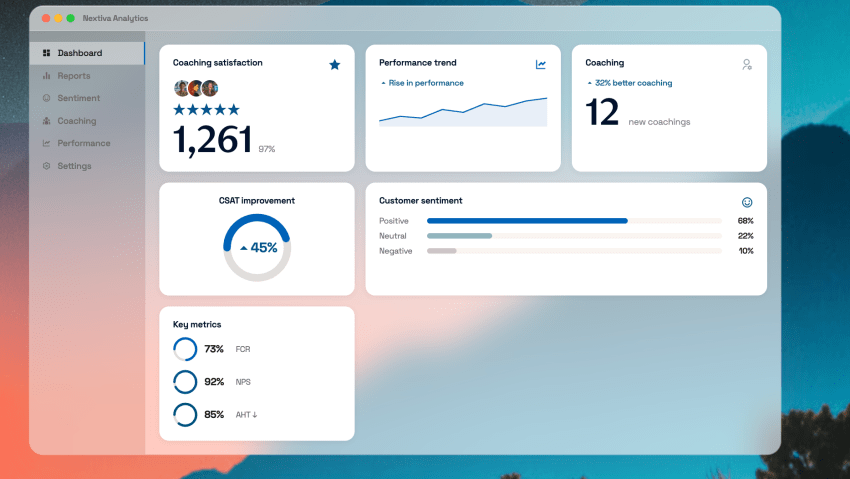
Nextiva’s AI-powered hosted contact center solutions are built for today’s distributed workforce. From the essentials like inbound/outbound routing and video meetings to omnichannel automation, real-time dashboards, and AI-powered summarization, Nextiva keeps your technology growing at the speed of your business.
Making the switch to a hosted contact center could be the transformative step your business needs to enhance customer satisfaction and drive growth.
The cloud contact center built for remote teams.
Get a hosted contact center system that powers up your customer experiences. Get Nextiva.
Hosted Call Center FAQs
Historically, “hosted” meant dedicated hardware in a data center, while “cloud” referred to shared resources. Today, the terms have largely merged under UCaaS (Unified Communications as a Service) and CCaaS (Contact Center as a Service). The best providers now combine the security of a private host (with dedicated encryption and compliance) with the unlimited scalability of the public cloud.
Yes — that’s now the main reason for businesses switching providers. Since the infrastructure is external, employees only need a secure internet connection and a laptop. Advanced contact center platforms like Nextiva offer real-time dashboards that enable managers to monitor employee performance and provide feedback during calls, regardless of employees’ physical location.
AI has evolved from answering simple questions to providing real-time agent support. During a call, the software transcribes the live audio and provides the agent with suggested answers, links to knowledge base articles, and alerts if the customer’s sentiment deteriorates. This reduces the cognitive load on agents and lowers the average handling time (AHT) without compromising quality.