Why scaling agencies optimize for fewer incidents, not faster fixes
When an agency manages one or two client sites, the speed at which you respond to an incident is the metric that matters most. If you know the environment, the fix is usually within reach. A resolved problem handled well can strengthen a client relationship, so a fast response is a skill you develop and a point of pride you build on.
However, the volume of incidents across a portfolio grows alongside the portfolio itself. With the wrong focus, you can get faster at fixing problems without reducing how often they happen. The distinction between response speed and incident frequency is where the real cost of a reactive agency lives.
Why fast incident response is the wrong success metric to follow
Single-site setups can sustain a fast-fix culture because incidents are rare and isolated. Knowing the environment in depth and having a familiar path to resolution means your response speed is a meaningful performance metric. This is called Mean Time to Recovery or Repair (MTTR): the average time it takes to resolve a failure once it occurs.
However, Mean Time Between Failures (MTBF) becomes a better indicator of operational health as you grow. Where MTTR measures recovery speed, MTBF measures how long a system runs before the next failure. A high MTBF means failures are infrequent, but a low MTBF means your team is in near-constant recovery, regardless of how fast each individual recovery happens.
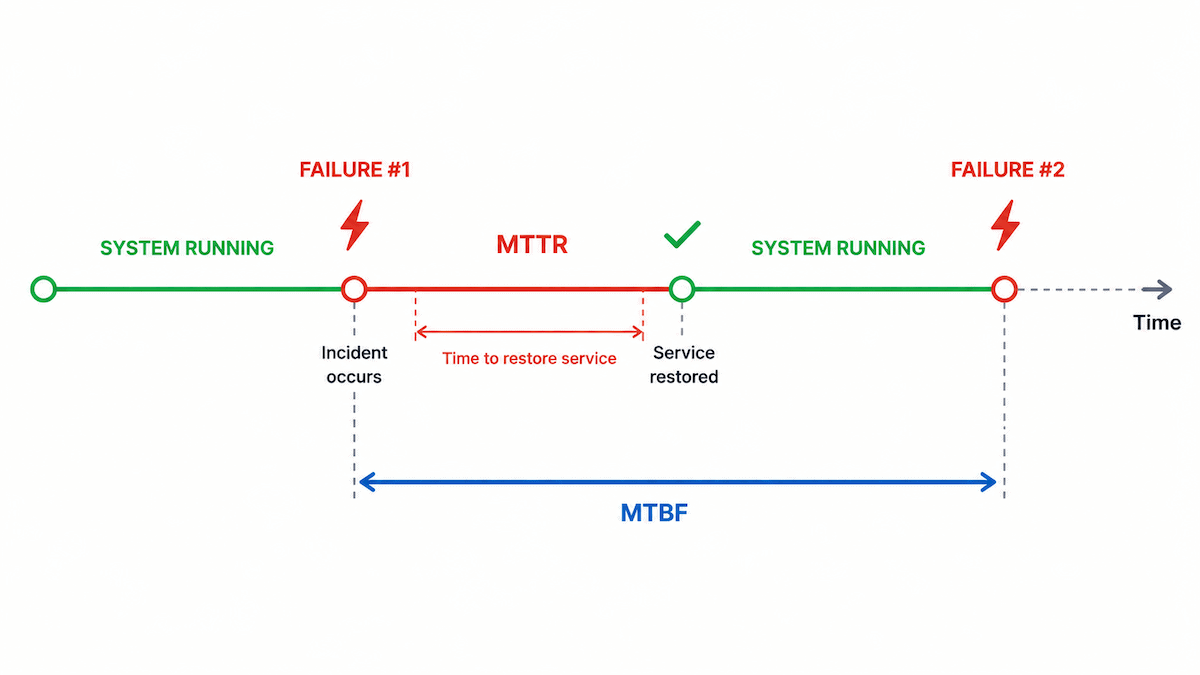
In a nutshell, if you only optimize for MTTR, you’re focusing on the repair shop while the vehicle keeps breaking down. Instead, you need MTTR to tell you about recovery efficiency and MTBF for whether the environment is generating incidents in the first place.
What a low MTBF costs in a growing portfolio
In a big portfolio, a low MTBF per site produces a support queue that response speed alone can’t address. Common incident types regularly overlap across multiple sites:
- Plugin update conflicts hit several installs simultaneously when an update rolls out across a shared plugin used throughout the portfolio.
- Bot-driven performance degradation can affect multiple sites at once when automated traffic bypasses caching and consumes PHP threads without limit.
- Deployment errors introduce configuration mistakes to live environments when staging workflows aren’t consistently followed.
- Shared infrastructure incidents on platforms that don’t isolate sites can cascade from one site to others on the same server.
Many of these create incidents that your team didn’t cause and can’t prevent within the environment. As such, being faster at fixing all of these is not the same as having fewer of them.
Hall is a Kinsta customer with decades of experience as a web agency. On its previous host, recurring site downtime during traffic peaks directly impacted a WooCommerce client’s revenue and absorbed team capacity that should have been on client work:
Kinsta works like we work. We need great performance so there are no surprises, and great support in case something does happen. Kinsta allows us to reduce the distractions of support and increase productivity.
The costs that don’t appear on incident tickets
Most agencies track the direct cost of an incident, typically the hours a developer or account manager spends diagnosing and resolving the problem. This number is real but incomplete, due to some hidden costs:
- Context-switching will pull a developer from a build project to handle a live site incident, but the build doesn’t pause. Research suggests it takes 15–25 minutes to fully regain deep focus after an interruption, meaning a single mid-morning incident can quietly erase the better part of a focused work block. That cost never appears on the incident ticket, but it compounds across every site in the portfolio.
- Client trust is strong if you handle and resolve a single incident with transparency. In contrast, a pattern of recurring incidents introduces doubt about whether the environment is sound. Frequency alone determines the client’s confidence over time.
- An agency built around reactive responses positions senior developers as a permanent first line of defence. As a standard operating mode for a growing portfolio, it drives turnover and capacity constraints and makes the negative situation grow further.
A team’s ongoing effort to stand between a portfolio and recurring failure is more of a platform problem than a staffing issue. The fix is an infrastructure that doesn’t require constant intervention to stay stable. Award-winning digital marketing agency Paramark describes a similar model before Kinsta:
It required excessive system administration to prevent websites from failing. Some of the constant issues included managing server resources and cleaning log files. Failure to do that meant websites would become unstable.
The solution (tracking incidents per site per month rather than time-to-resolution) tells you whether the environment is genuinely improving or if your team is simply getting better at managing an ongoing problem.
What preventing incidents looks like
Kinsta’s infrastructure and overall platform are built around this philosophy, reducing the likelihood of incidents rather than just their recovery time.
First, each site runs in its own isolated Linux container with a dedicated software stack. Resources can’t cross container boundaries, and this applies even between sites belonging to the same company account.
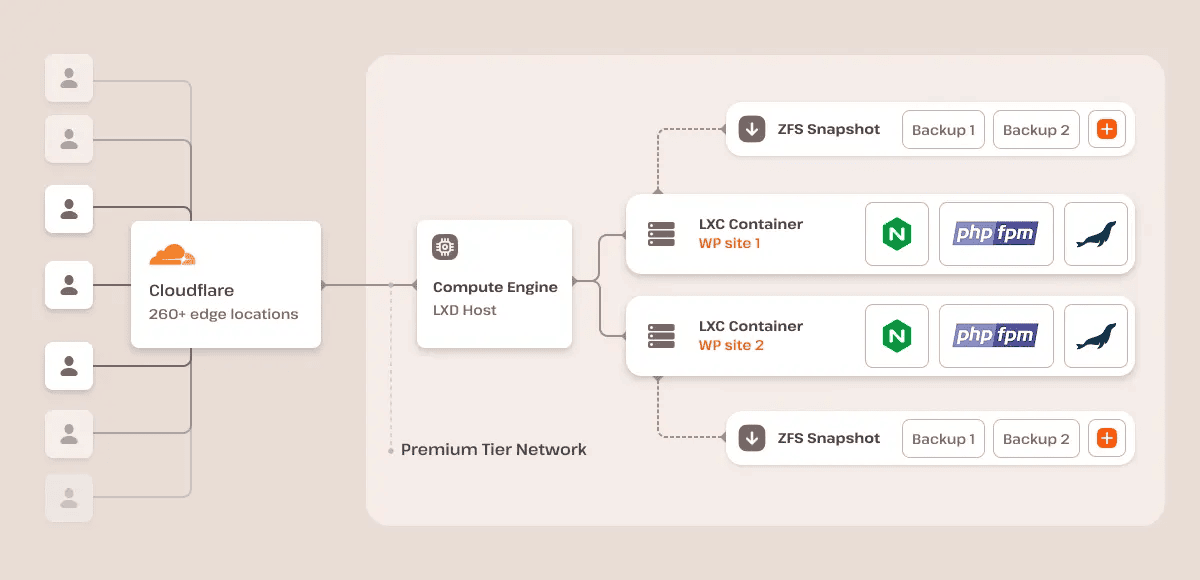
For an agency portfolio, individual environment incidents have no path to the performance or availability of any other site you manage. In contrast, on shared hosting platforms, a resource spike on one site degrades others on the same server.
Automatic backups and one-click restore
Kinsta creates complete daily backups of every site and retains them for at least 14 days. You access and restore backups from the Backups screen in MyKinsta, where you also access two other types of relevant backup types:
- System-generated backups trigger automatically before key operations, such as restoring from an existing backup. A restore point always exists before an operation runs.
- Manual backups let you create up to five additional snapshots at any time, which you can also label for identification.
The Restore to button for each backup lets you roll back to a known state with minimal clicks. For agencies running Kinsta Automatic Updates across a portfolio, every scheduled update runs with a system-generated restore point already in place. The process is now ‘restore plus investigate’, which is predictable regardless of the affected site.
Staging environments and selective push
Kinsta’s staging environments provide a separate copy of the live site to test changes before any of them reach clients. Every Kinsta plan includes one free standard staging environment per site. When a change is ready to deploy, selective push gives you control over exactly what moves to production.
To use selective push, select your staging environment in MyKinsta, click Push environment, and choose a deployment scope (Files or Database). Each scope also has a drop-down menu that lets you fine-tune what is pushed:
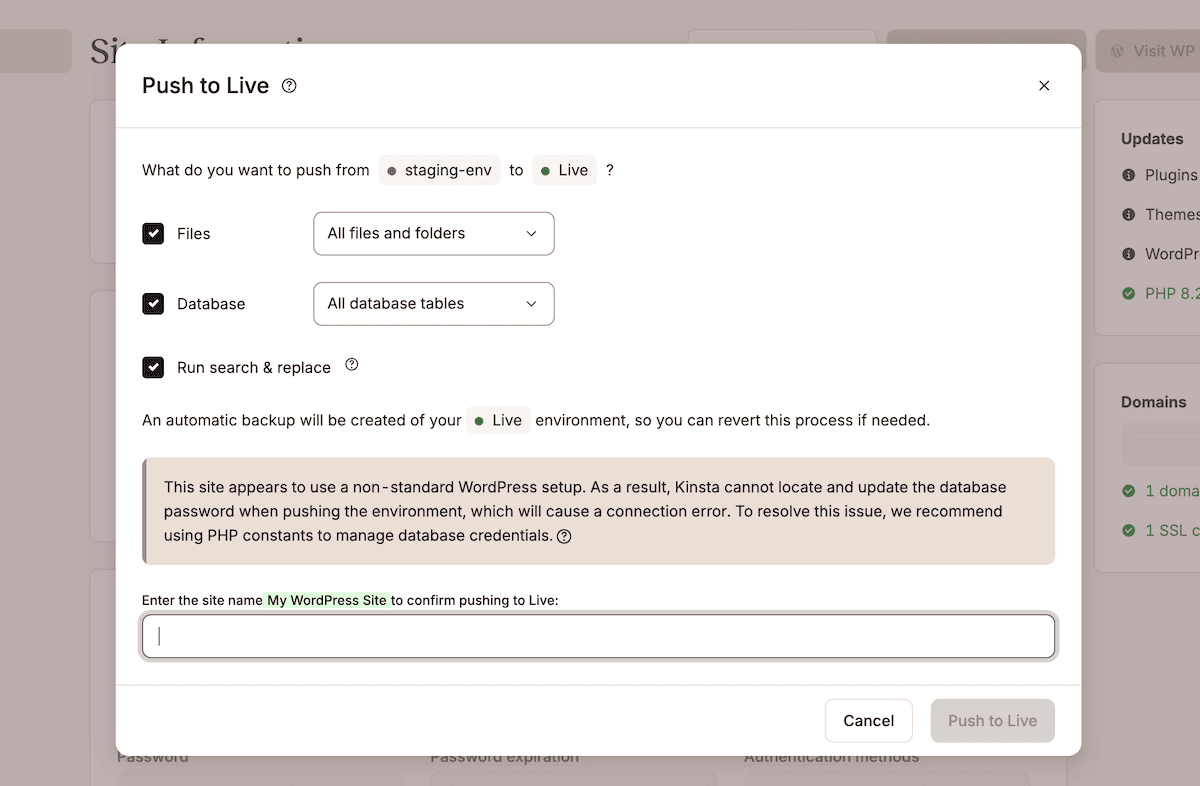
Kinsta creates an automatic backup of the target environment before every push. Deployment errors that reach live sites are frequent sources of incidents, so a multi-environment setup that employs selective push and automatic pre-push backups is one way to halt any need for urgent live-site intervention.
Bot protection as a performance-incident layer
Kinsta’s Bot Protection filters traffic before WordPress processes a request to reduce automated load at the infrastructure level before it affects server performance. By default, Kinsta blocks traffic classified as malicious across the platform.
To configure protection for a site, go to the Bot Protection screen in MyKinsta and click Change within the Protection level panel:
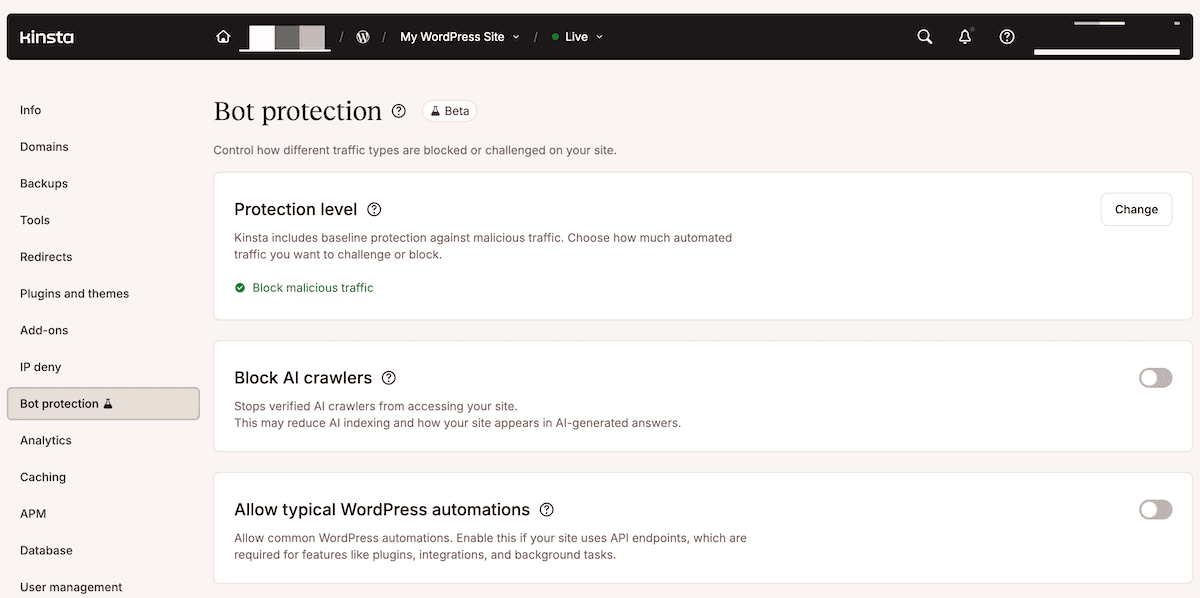
There are four available levels to choose from and Block malicious traffic is the default for all sites. This blocks DDoS attempts and requests from IPs associated with known attack sources. However, you can also extend this to block confirmed automated traffic, issue challenges to likely-bot and unclassified requests, and even challenge all non-verified traffic including likely-human visitors.
If you multi-select sites within MyKinsta and click Actions > Change bot protection, you can also apply a protection level across multiple sites at once. Bot-driven load can bypass caching entirely and consume PHP threads with each request, especially for managing WooCommerce or membership sites. Having this functionality to hand is becoming more necessary over time.
Analytics as an early-warning layer
MyKinsta’s analytics suite gives you visibility into conditions before they become client-facing problems. From the Analytics screen, the Performance tab tracks PHP response times and PHP thread usage over time. A pattern of rising response times without a corresponding rise in human traffic is often an early signal pointing to bot load or an inefficient database query:
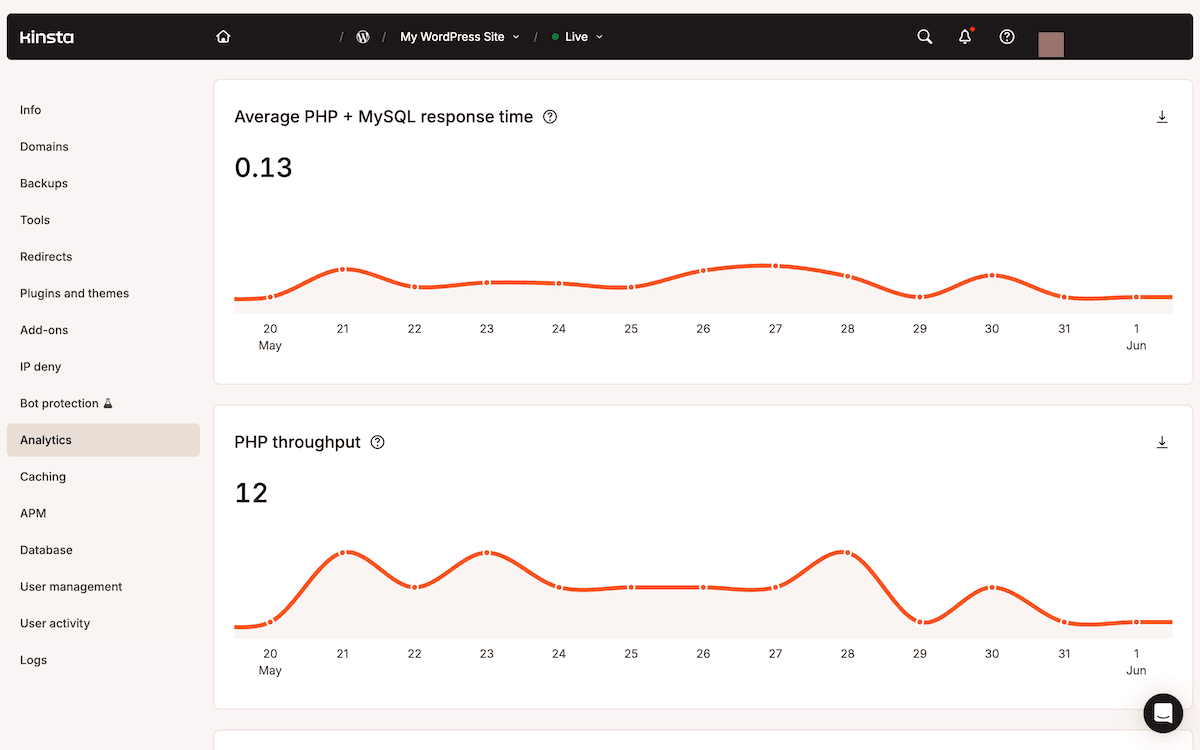
Reviewing the analytics charts together takes a few minutes per site and catches patterns that reactive monitoring misses. For instance, viewing the Visits chart under Plan usage, you can see data on aspects such as billable human traffic. If you compare this to the Top requests by views report (which covers all traffic, including automated requests), you get an insight into where bot-driven load is affecting server performance while visit counts appear normal.
Shifting your agency’s operating model toward prevention
Moving towards fewer incidents is supported by platform and functionality choice rather than different working patterns.
For example, start recording contributing individual site factors alongside resolution steps when an incident occurs. The goal isn’t documentation for its own sake, but to see whether incidents recur for the same underlying reasons. The logs within MyKinsta can help here:
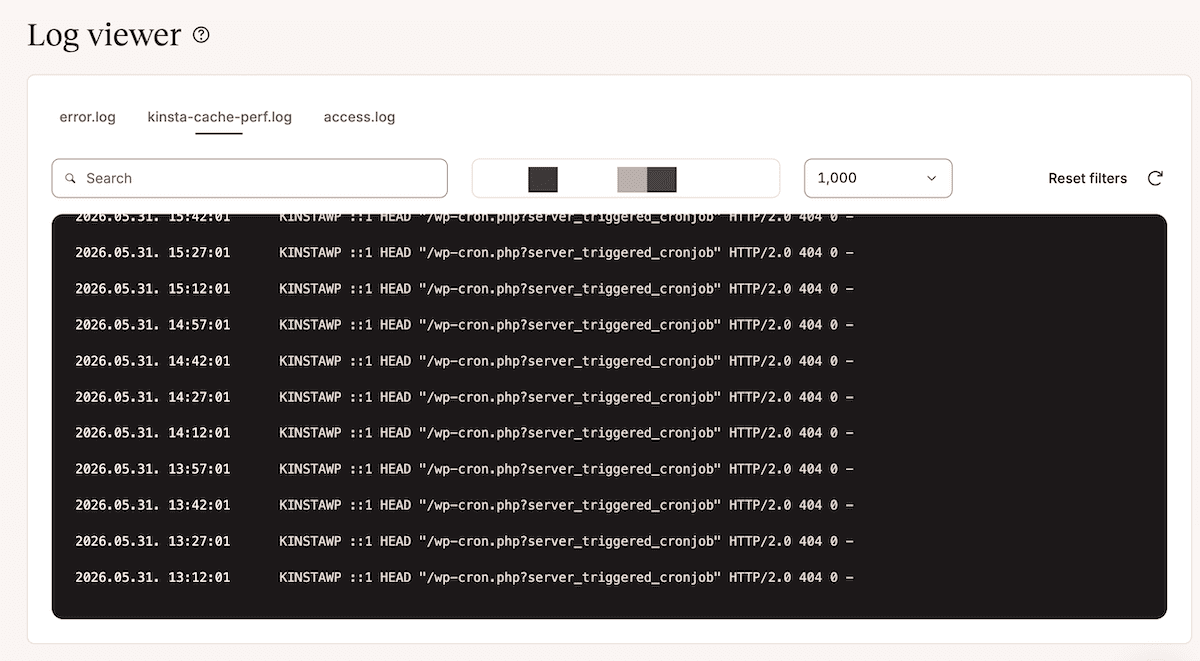
A log that shows three incidents on the same site caused by plugin update conflicts points toward a staging workflow gap. Without the record, the pattern stays invisible and the incidents continue.
A pre-deployment checklist is an optimal way to align the decisions you have already made into a repeatable process. The items below prevent the most common classes of avoidable incident:
- Test every change in a Kinsta staging environment against a production-representative state before pushing.
- Use selective push to match the deployment scope to the change.
- Review Bot Protection after any deployment that adds public-facing dynamic functionality, particularly forms, checkout flows, or login endpoints.
- Check the Performance chart under Analytics after deployment to confirm response times stay within range.
Once you track per-site incidents regularly, you can report on reliability trends proactively, rather than explaining problems after-the-fact. A client who receives a quarterly summary showing declining incident frequency and consistent uptime has a different perception of the service than one who receives a call after each event.
Prevention-first infrastructure is what makes agency scaling sustainable
Fast incident response is a fundamental capability for any agency. Infrastructure that makes incidents infrequent is what determines whether that capability is in constant use or rarely needed. At agency scale, the gap between the two is where profitability and team stability are decided.
Kinsta’s toolset and infrastructure (such as its container isolation, automatic backup system, and bot protection) address the incident categories that you spend the most time responding to. From there, the process you implement, such as an incident log or pre-deployment checklist, makes the reduction consistent across every site you manage.
For agencies managing client sites on Kinsta, the Agency Partner Program provides dedicated support, co-selling resources, and tooling built around managing WordPress at scale.

Kinsta
Joel is a Frontend developer working at Kinsta as a Technical Editor. He is a passionate teacher with love for open source and has written over 300 technical articles majorly around JavaScript and it’s frameworks.